

Black Sheep Sweater
Black Sheep Sweater
Regular price
$288.00
Regular price
Sale price
$288.00
Unit price
per
-
 LOW STOCK
 -
 LOW STOCK
 -
 LOW STOCK
 -
 LOW STOCK
 -
 LOW STOCK
 -
 LOW STOCK


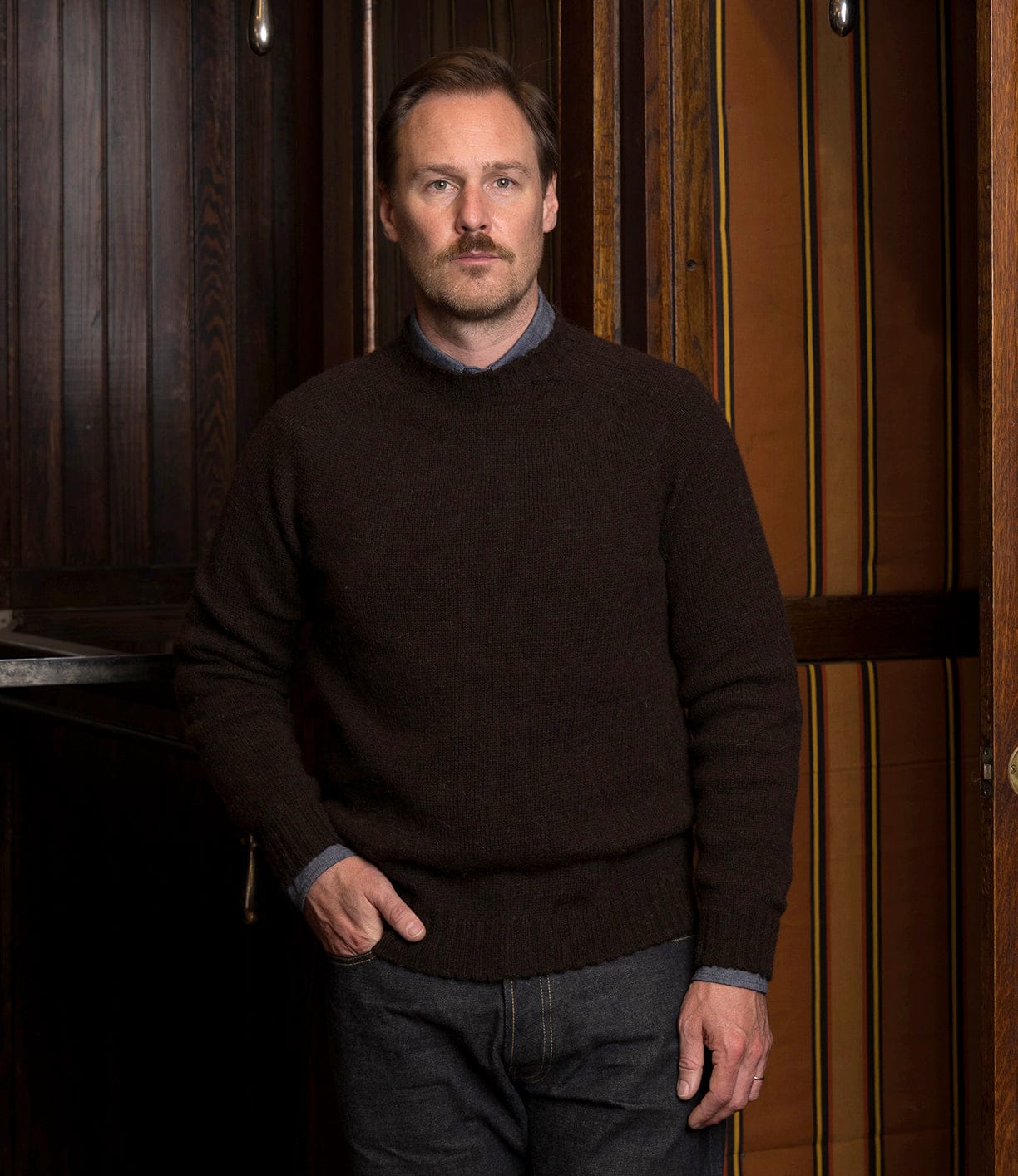


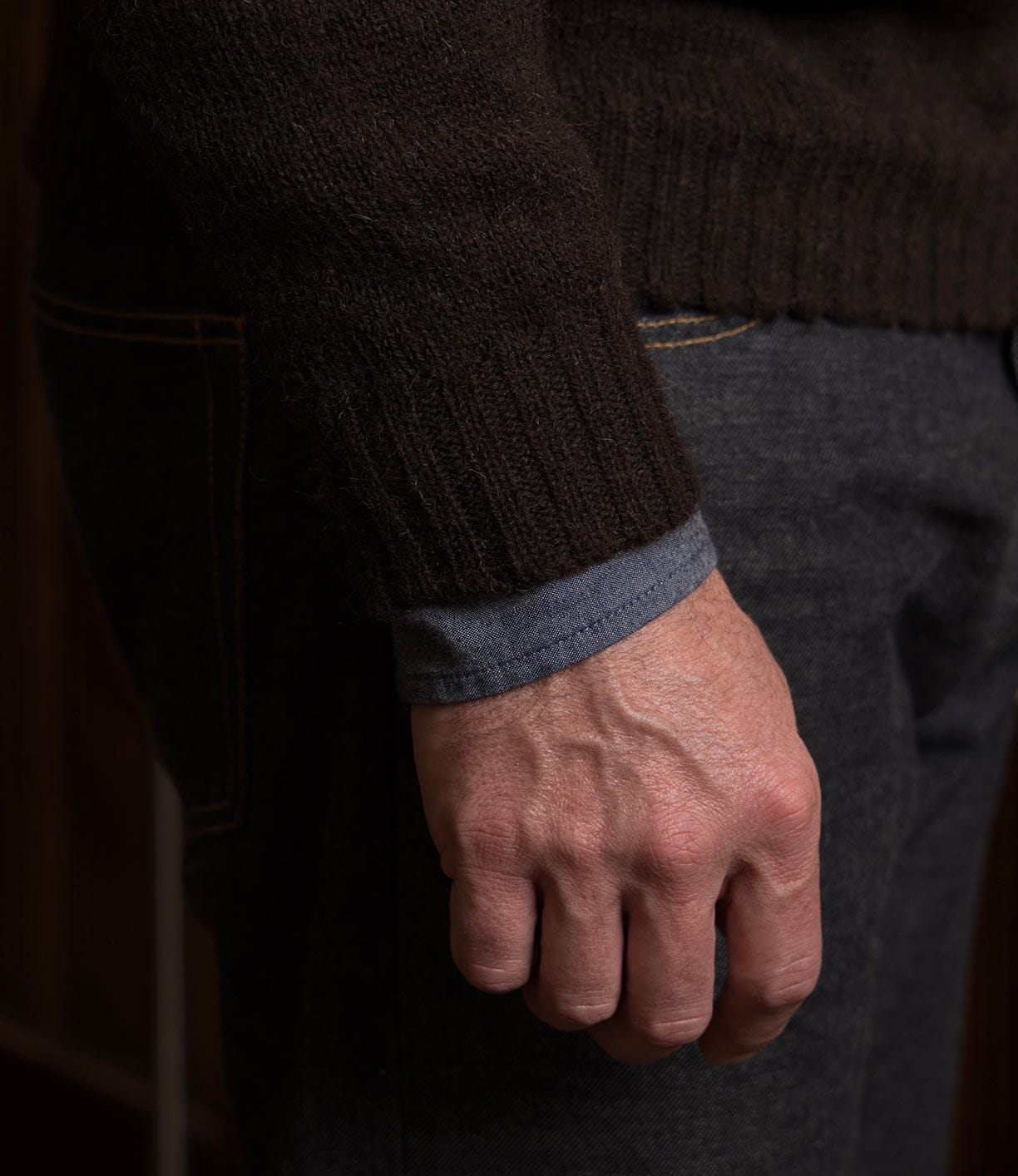
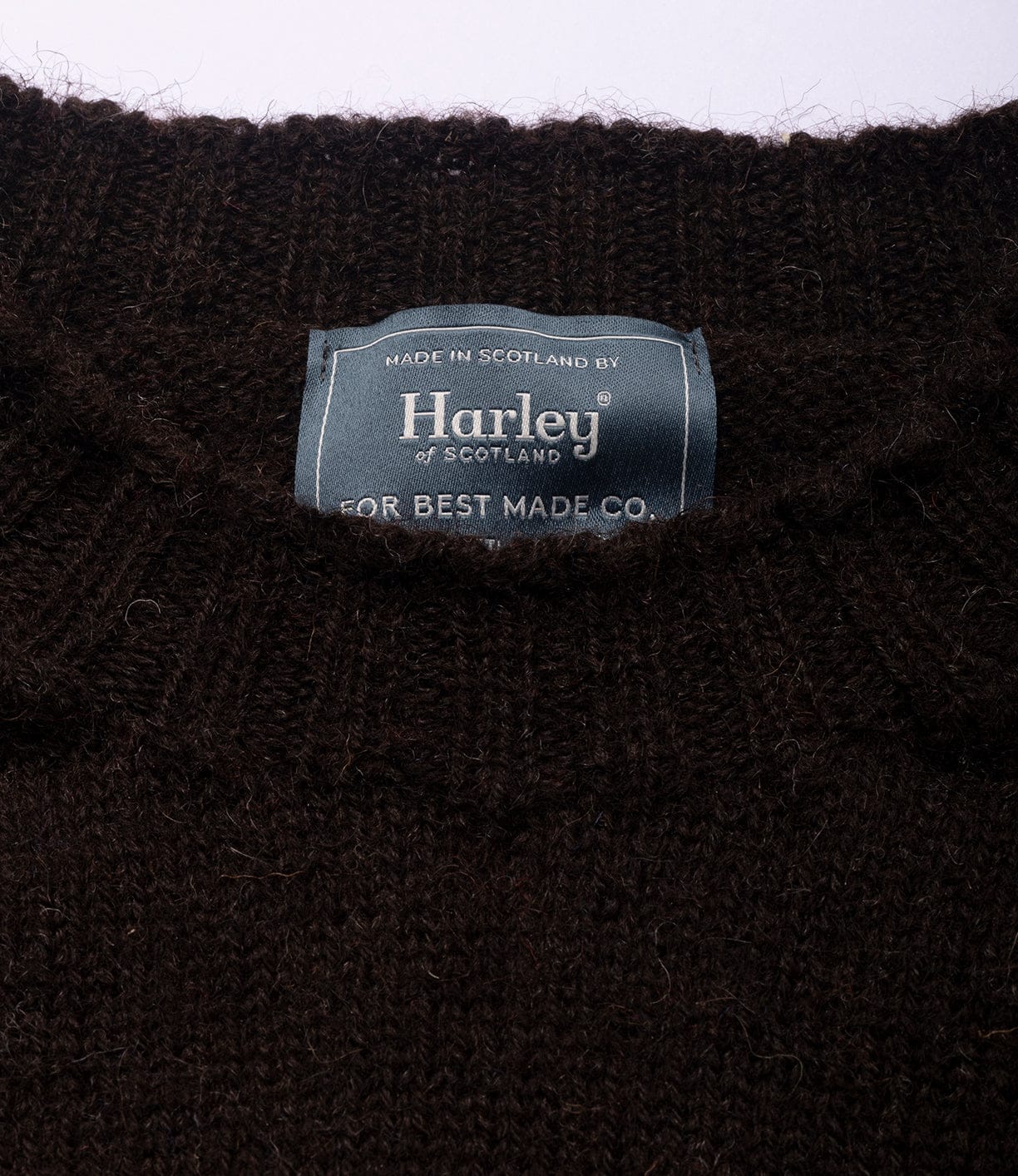

The color of the Black Sheep Sweater carries particular significance in Shetland breeding. True black Shetland sheep are relatively rare compared to their lighter-colored counterparts, and the depth of their fleece color is remarkable—a genuine, permanent black that comes from melanin naturally present throughout each fiber. This genetic coloration fades gradually and evenly with exposure to sunlight and wear, developing rich variations in tone that would be impossible to achieve through dyeing. The undyed state also preserves the wool's natural softness and hand, as dyeing processes can sometimes compromise the fiber's intrinsic qualities.
Doubling the yarn fundamentally transforms the garment's properties. Where the single weight employs one strand of 2-ply worsted Shetland yarn, the double weight uses two strands knitted together—four individual plies working in concert. This creates a substantially denser, heavier fabric with exceptional thermal properties and remarkable durability.
The 3.5-gauge seamless machine used for this construction has 3.5 needles per inch, creating a more open knit structure than the finer 5-gauge machine. This coarser gauge is essential for accommodating the doubled yarn without creating an impossibly tight, rigid fabric. The more open stitch pattern also enhances the sweater's thermal efficiency by trapping more air between stitches—those air pockets provide superior insulation while maintaining breathability.
Harley of Scotland's seamless knitting technique produces a continuous tube of fabric that's shaped and finished without traditional side seams. This construction method, while requiring more sophisticated machinery and greater skill, creates a superior garment. The absence of seams eliminates bulk under the arms and along the sides, prevents the irritation that seams can cause during extended wear, and removes the primary failure point in most knitwear construction. The continuous fabric also moves more naturally with the body and maintains consistent stretch characteristics throughout the garment.
Doubling the yarn fundamentally transforms the garment's properties. Where the single weight employs one strand of 2-ply worsted Shetland yarn, the double weight uses two strands knitted together—four individual plies working in concert. This creates a substantially denser, heavier fabric with exceptional thermal properties and remarkable durability.
The 3.5-gauge seamless machine used for this construction has 3.5 needles per inch, creating a more open knit structure than the finer 5-gauge machine. This coarser gauge is essential for accommodating the doubled yarn without creating an impossibly tight, rigid fabric. The more open stitch pattern also enhances the sweater's thermal efficiency by trapping more air between stitches—those air pockets provide superior insulation while maintaining breathability.
Harley of Scotland's seamless knitting technique produces a continuous tube of fabric that's shaped and finished without traditional side seams. This construction method, while requiring more sophisticated machinery and greater skill, creates a superior garment. The absence of seams eliminates bulk under the arms and along the sides, prevents the irritation that seams can cause during extended wear, and removes the primary failure point in most knitwear construction. The continuous fabric also moves more naturally with the body and maintains consistent stretch characteristics throughout the garment.
100% Shetland Wool
Shetland wool requires straightforward care. The natural lanolin in the fiber provides inherent stain and odor resistance, so these sweaters need washing less frequently than you might expect. When they do need cleaning, follow these guidelines:
Washing: Hand wash in cool water using wool-specific detergent, or machine wash on a gentle cycle in a mesh bag. Never use hot water—it causes felting and shrinkage. Avoid fabric softeners, which coat the fiber and reduce its natural breathability.
Drying: Gently press out excess water without wringing or twisting. Lay flat on a clean towel away from direct heat or sunlight. Never tumble dry or hang wet—the weight will distort the shape. Proper flat drying maintains the sweater's structure indefinitely.
Storage: Clean before storing. Fold rather than hang to prevent shoulder distortion. For long-term storage, use breathable cotton bags, not plastic. Cedar or lavender sachets deter moths naturally.
Daily Care: Air the sweater between wears rather than washing after each use. Small pills that appear in the first few wears can be removed with a sweater stone or fabric shaver—after that, the worsted construction resists further pilling. Shetland wool improves with age. The fiber softens gradually through wear while maintaining its structure and warmth. Treat these sweaters as what they are: working garments built to perform for decades.
Washing: Hand wash in cool water using wool-specific detergent, or machine wash on a gentle cycle in a mesh bag. Never use hot water—it causes felting and shrinkage. Avoid fabric softeners, which coat the fiber and reduce its natural breathability.
Drying: Gently press out excess water without wringing or twisting. Lay flat on a clean towel away from direct heat or sunlight. Never tumble dry or hang wet—the weight will distort the shape. Proper flat drying maintains the sweater's structure indefinitely.
Storage: Clean before storing. Fold rather than hang to prevent shoulder distortion. For long-term storage, use breathable cotton bags, not plastic. Cedar or lavender sachets deter moths naturally.
Daily Care: Air the sweater between wears rather than washing after each use. Small pills that appear in the first few wears can be removed with a sweater stone or fabric shaver—after that, the worsted construction resists further pilling. Shetland wool improves with age. The fiber softens gradually through wear while maintaining its structure and warmth. Treat these sweaters as what they are: working garments built to perform for decades.
Made in Scotland