
Indigo Moleskin Work Shirt
Indigo Moleskin Work Shirt
Regular price
$328.00
Regular price
Sale price
$328.00
Unit price
per


Product Details
The moleskin in our workshirt originates in the Senshu region of Osaka Prefecture, one of Japan's premier centers for high-quality textile manufacturing. It's woven on air-jet looms that enable a high-density weave essential for this moleskin's exceptional durability. Achieving this density requires specialized loom configuration—balancing the tight weave structure against the fabric's integrity, a technical challenge few mills can execute properly.
The greige (undyed) fabric travels to Fukuyama City in Hiroshima Prefecture for dyeing. Traditional indigo dyeing—not synthetic alternatives—creates this fabric's distinctive deep blue and natural fading characteristics. The process yields a beautiful thread definition and a subtle, glossy appearance. Unlike piece-dyed fabrics, where color sits on the surface, indigo penetrates the fibers, ensuring the color fades gracefully over time rather than simply washing out. This is the character that makes vintage workwear so sought after, built into the fabric from the beginning.
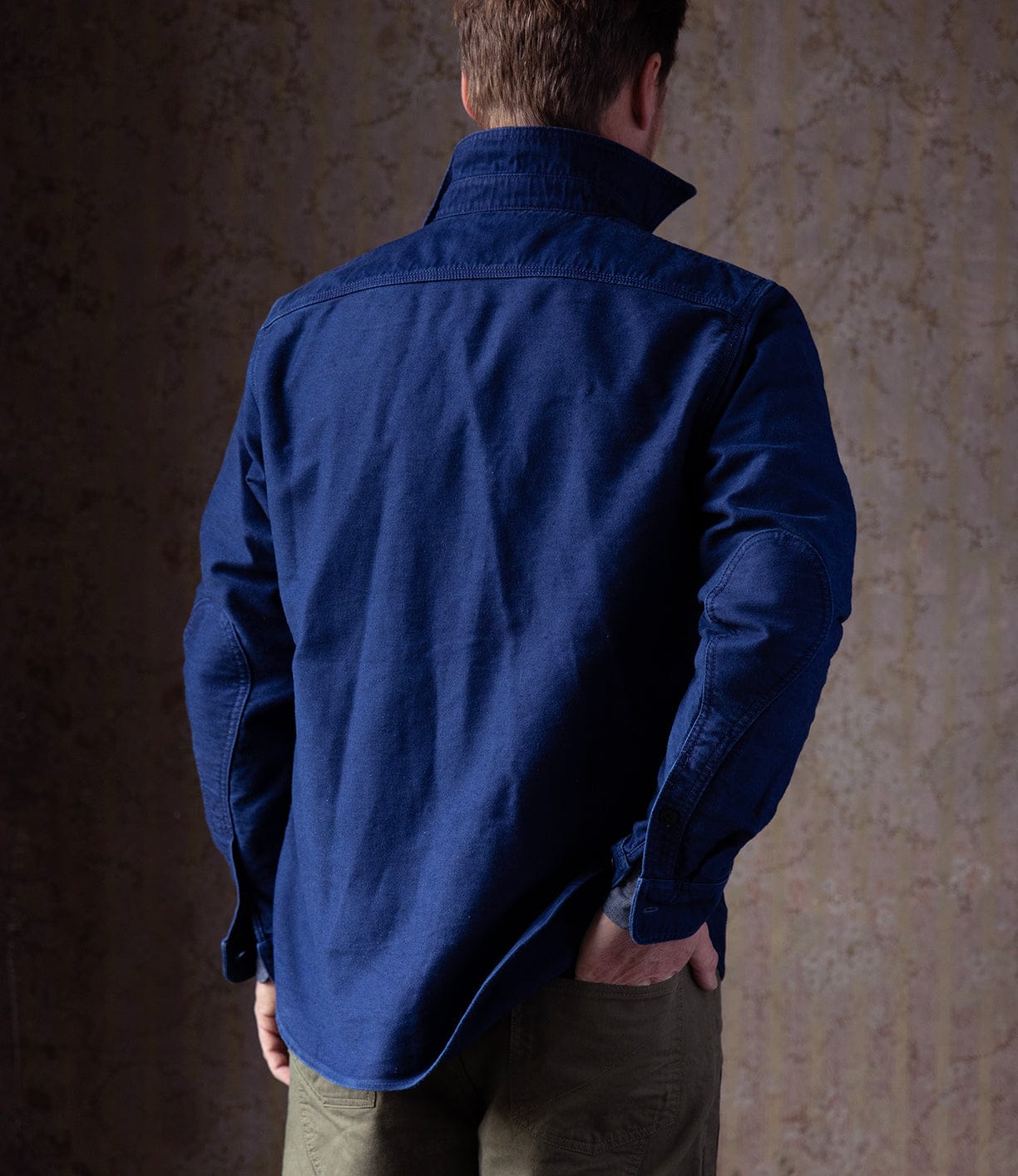
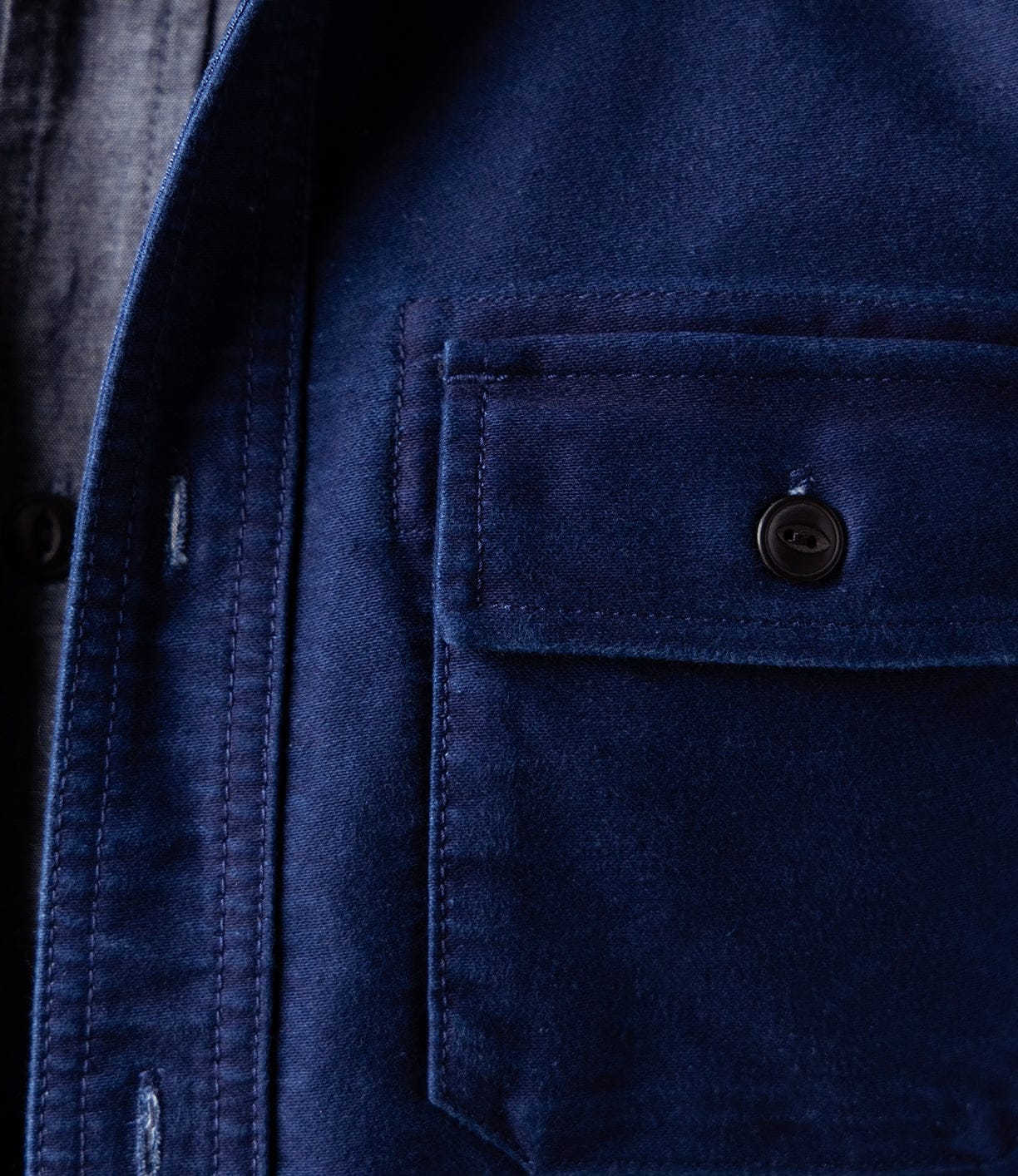
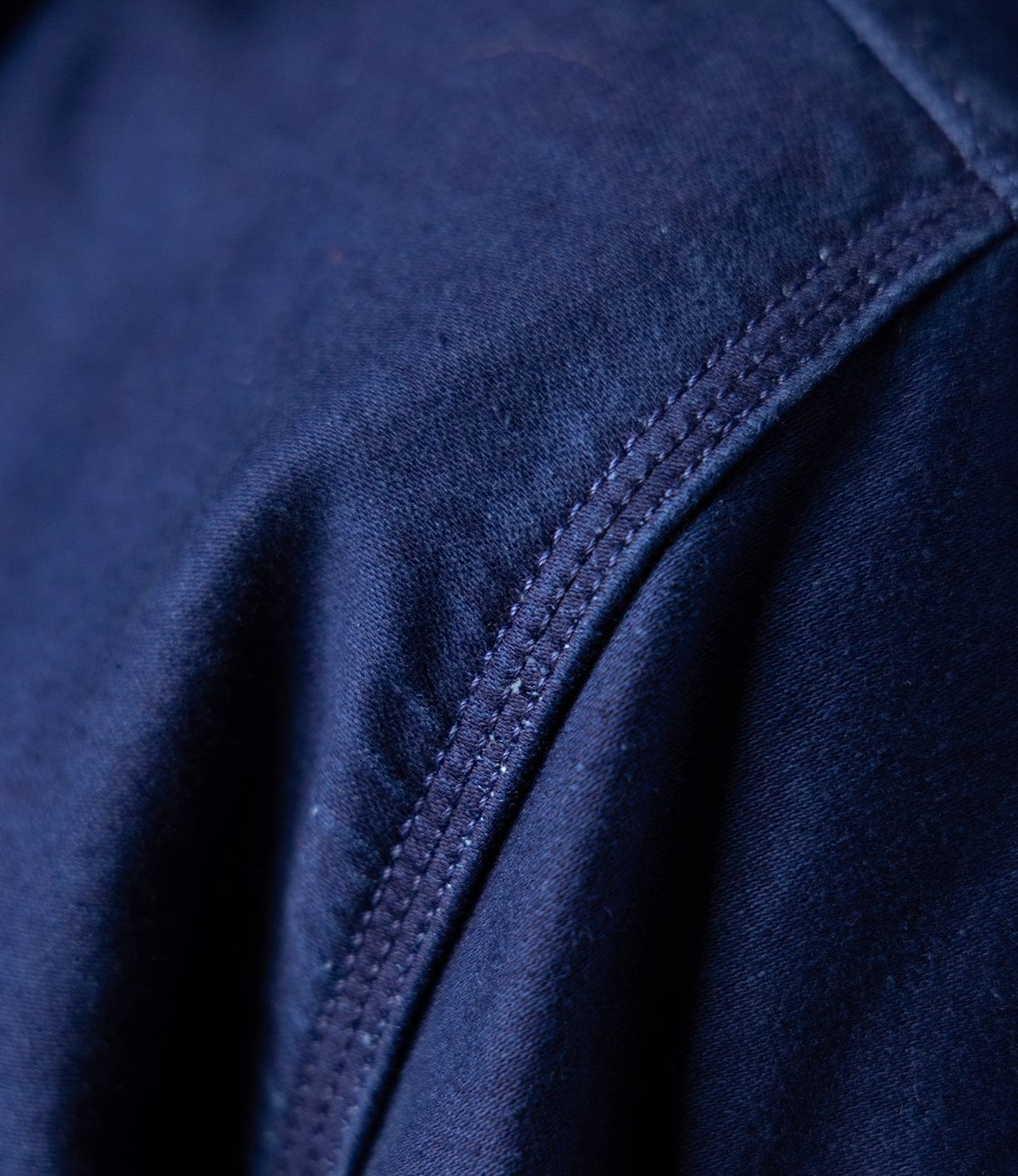
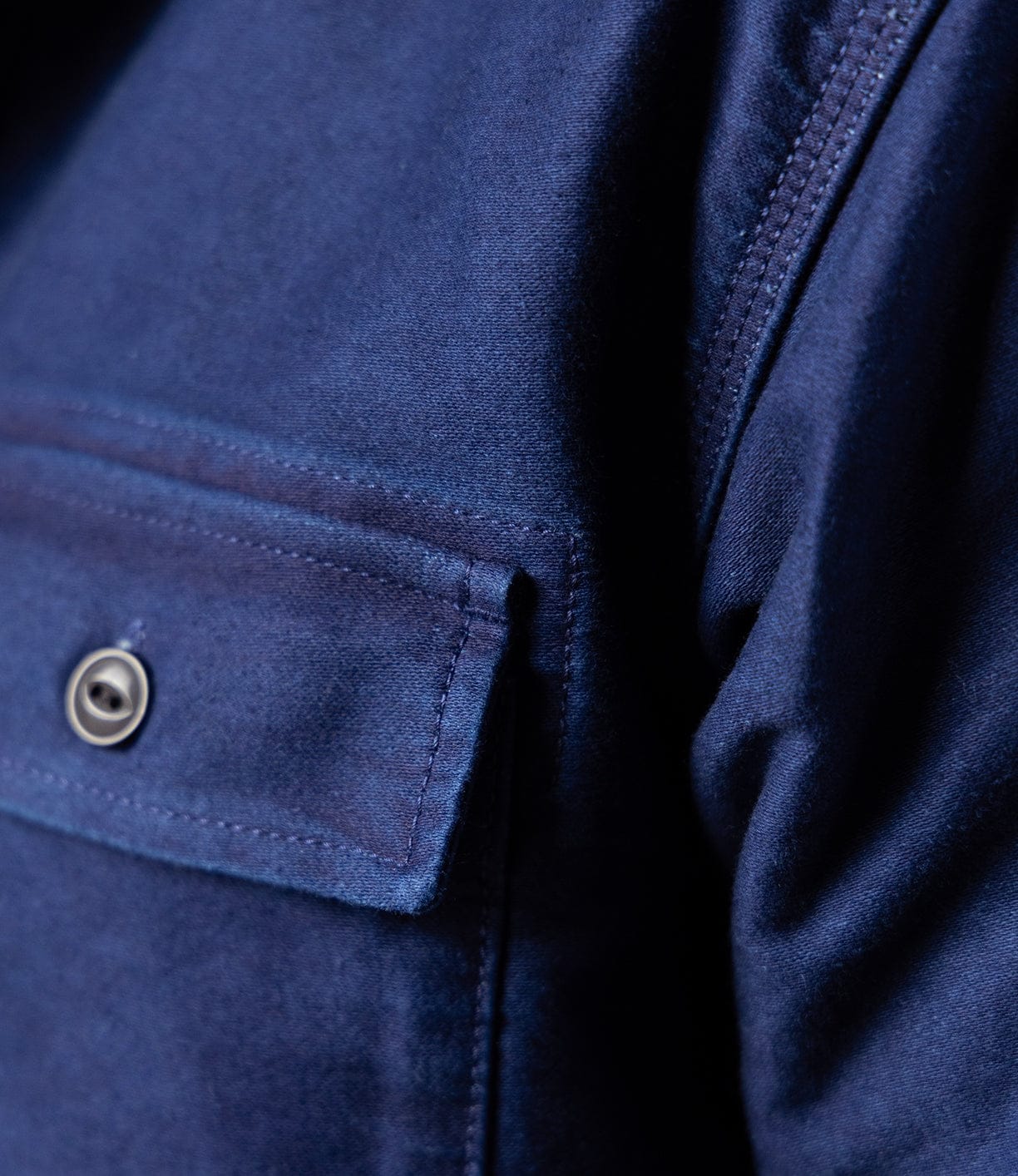
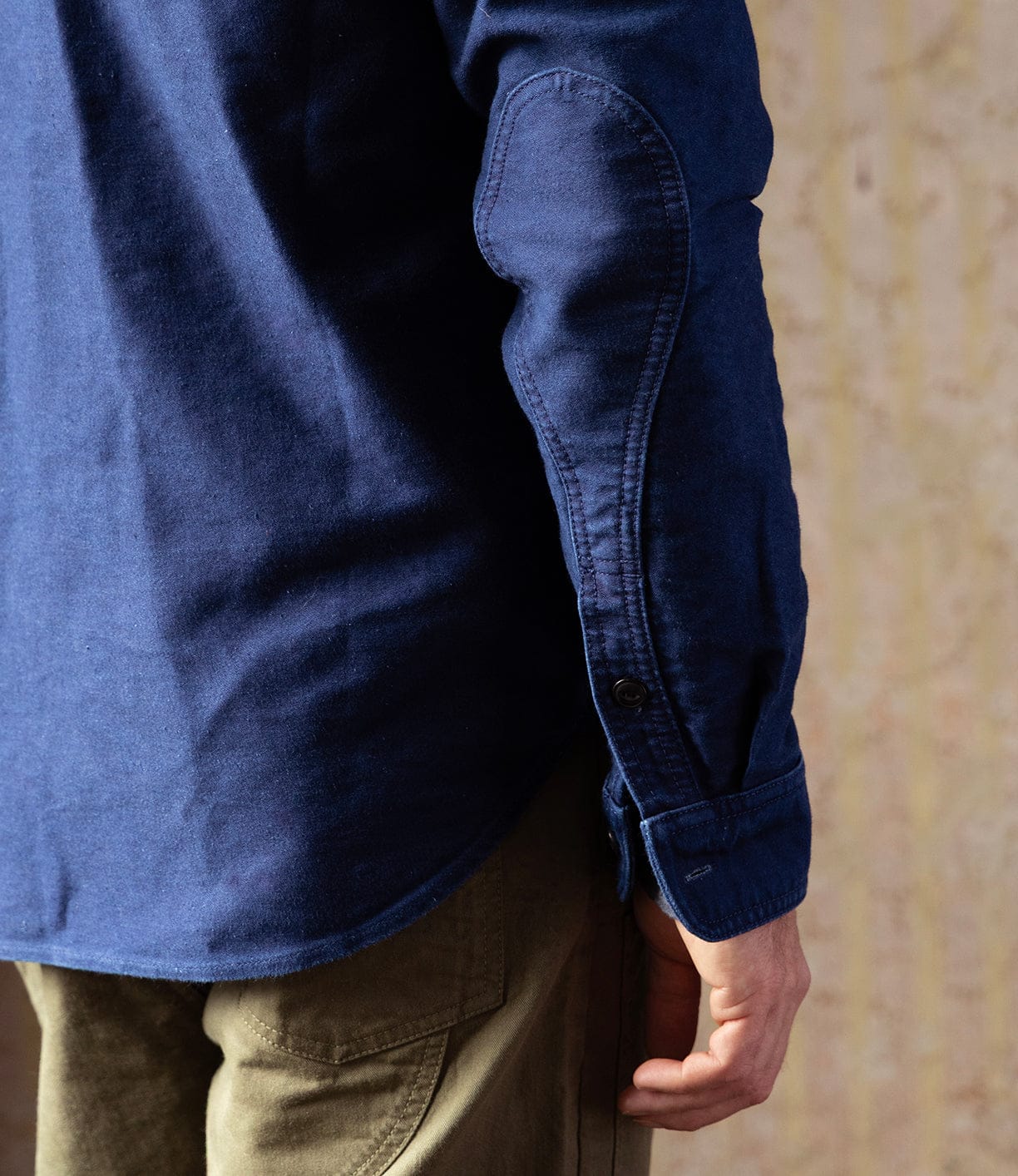
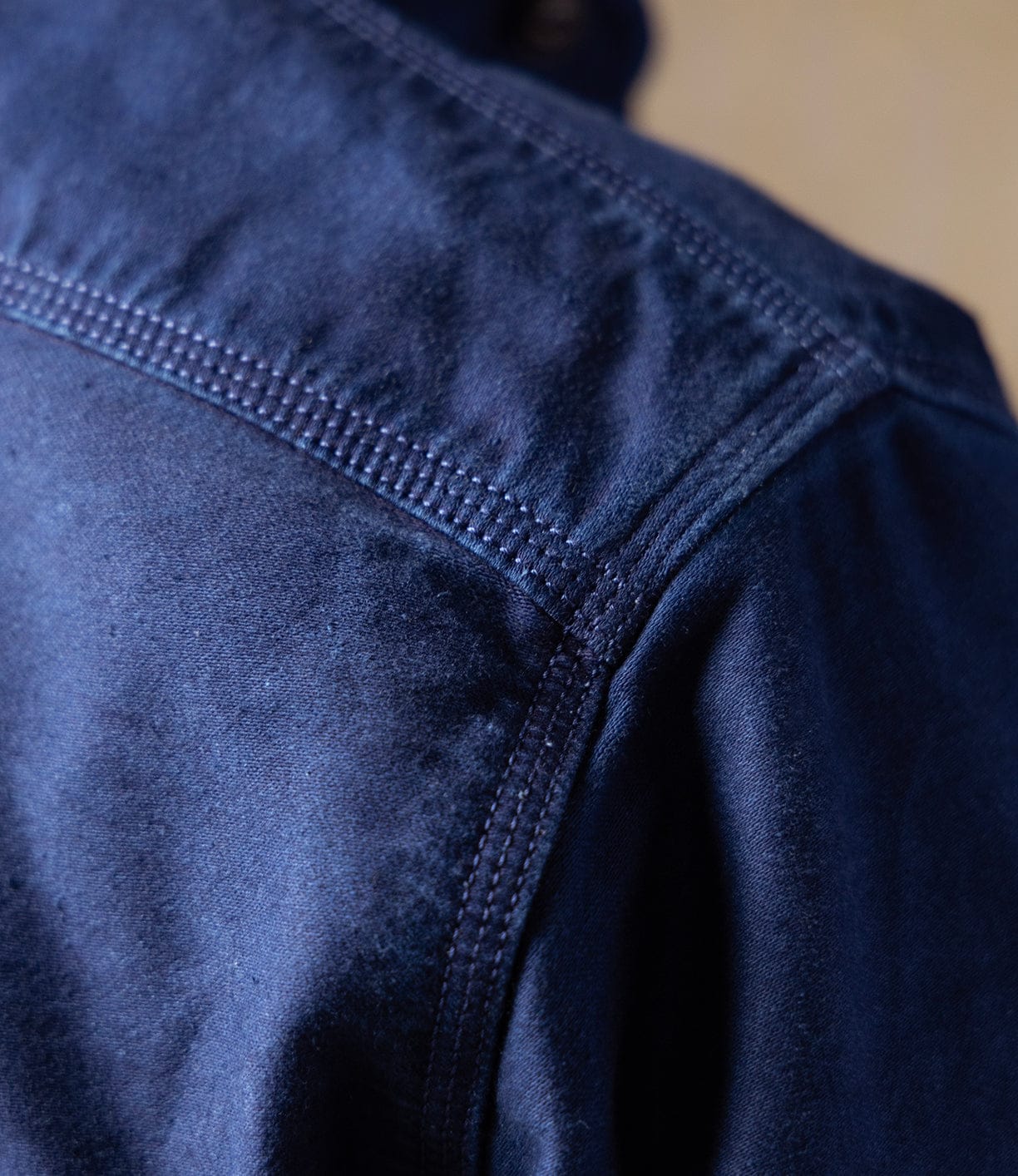
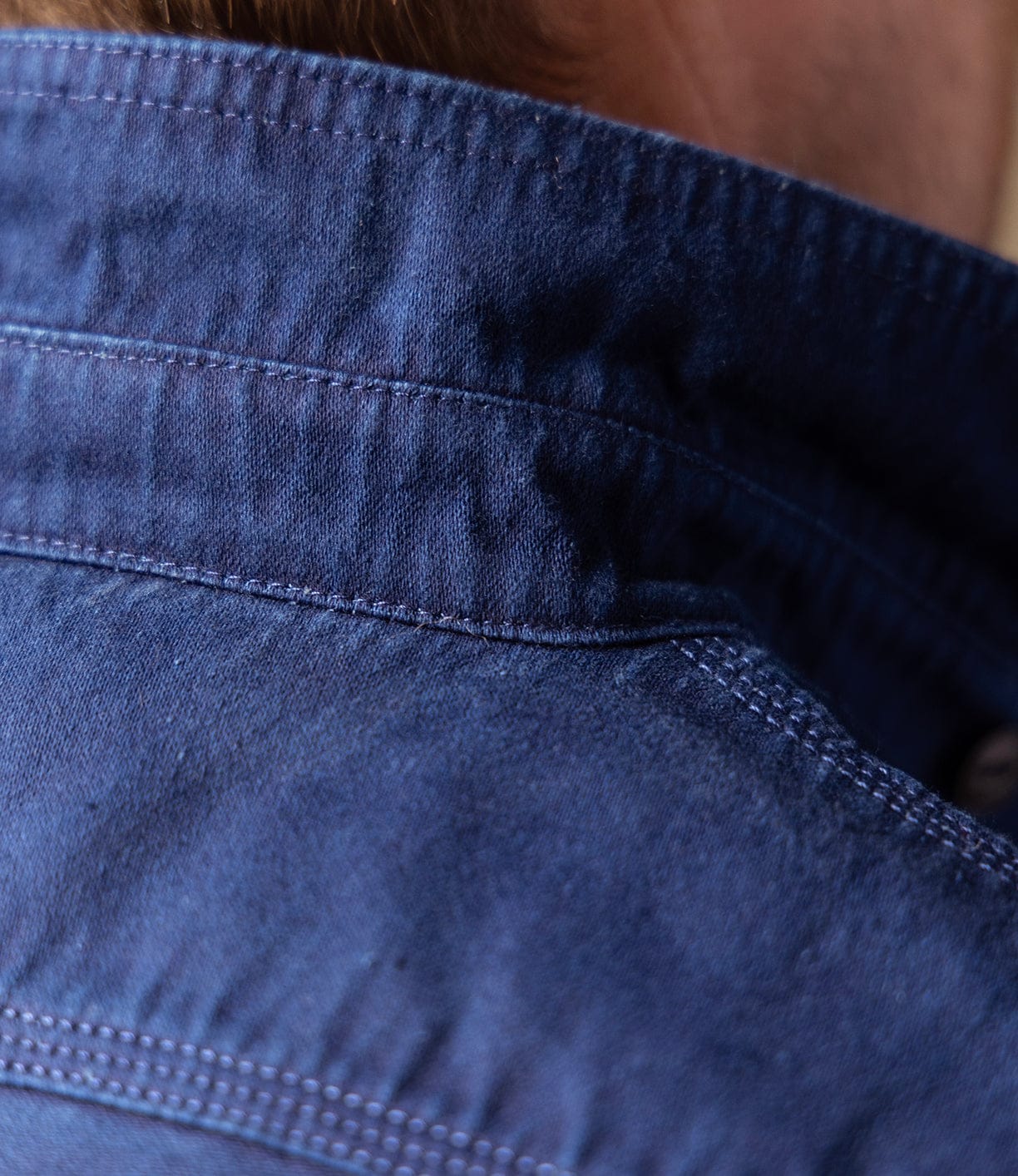
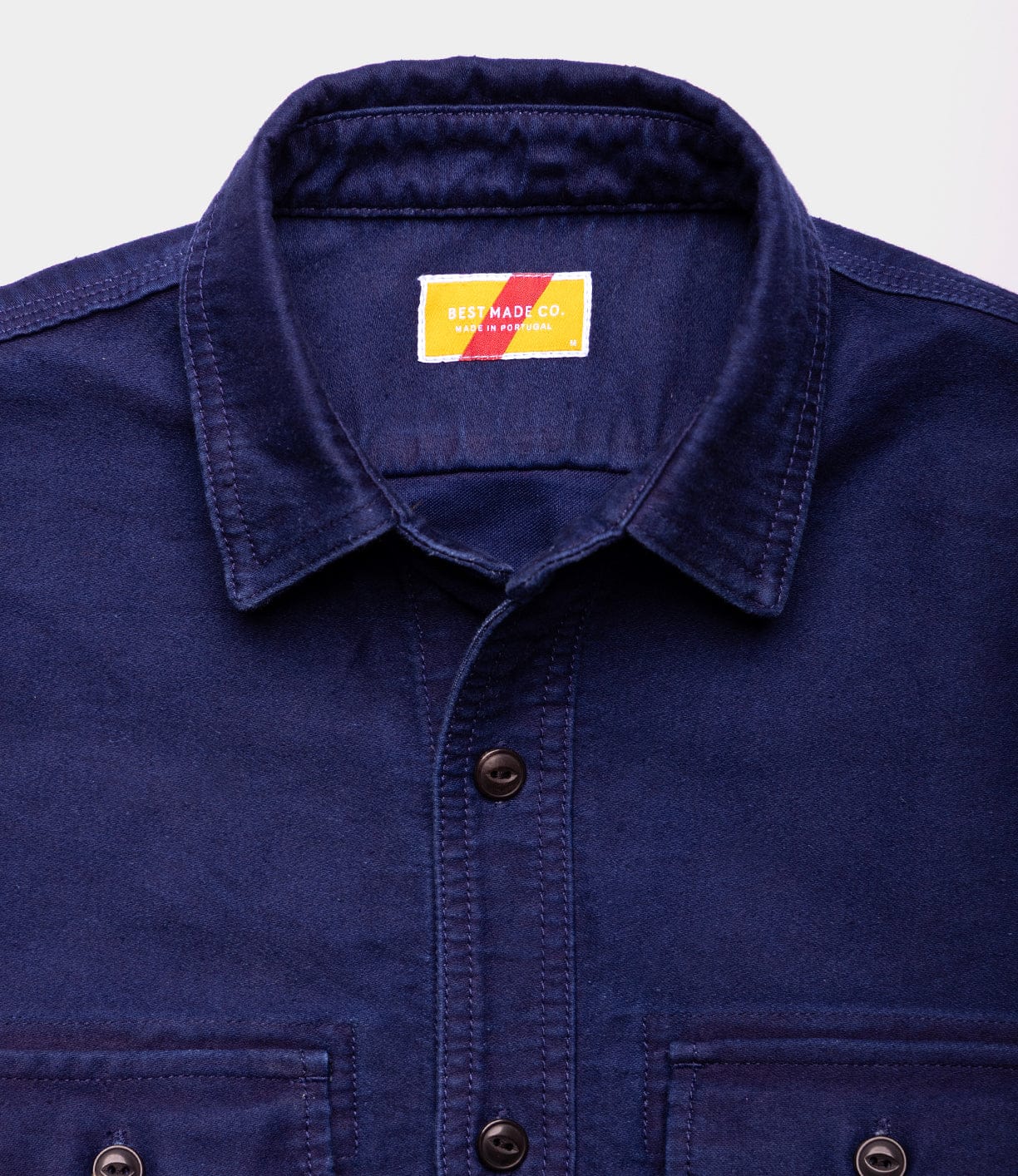
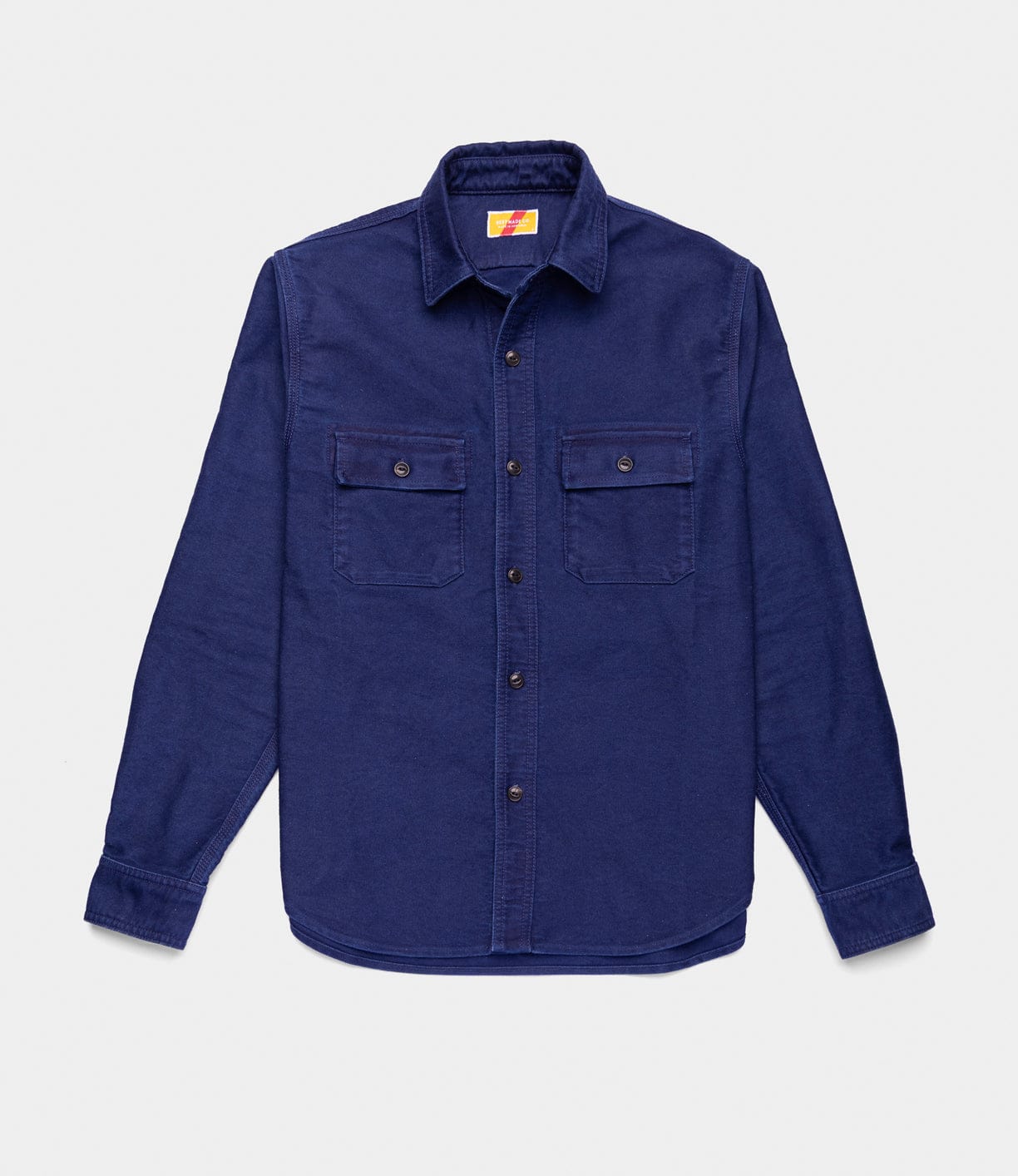
The Portuguese construction honors the fabric's quality. Triple-needle stitching reinforces the shoulders, armholes, and side seams—the stress points that would fail in lesser garments. Front pockets receive self-fabric backing for durability. And don't forget our cuff-to-elbow-tuff reiforcements. Natural corozo buttons, derived from tagua palm nuts, offer both functional strength and an organic aesthetic that complements the traditional indigo dyeing process. Every detail serves to enhance the garment's longevity.
The greige (undyed) fabric travels to Fukuyama City in Hiroshima Prefecture for dyeing. Traditional indigo dyeing—not synthetic alternatives—creates this fabric's distinctive deep blue and natural fading characteristics. The process yields a beautiful thread definition and a subtle, glossy appearance. Unlike piece-dyed fabrics, where color sits on the surface, indigo penetrates the fibers, ensuring the color fades gracefully over time rather than simply washing out. This is the character that makes vintage workwear so sought after, built into the fabric from the beginning.
The Portuguese construction honors the fabric's quality. Triple-needle stitching reinforces the shoulders, armholes, and side seams—the stress points that would fail in lesser garments. Front pockets receive self-fabric backing for durability. And don't forget our cuff-to-elbow-tuff reiforcements. Natural corozo buttons, derived from tagua palm nuts, offer both functional strength and an organic aesthetic that complements the traditional indigo dyeing process. Every detail serves to enhance the garment's longevity.

- 100% Cotton
- Corozo buttons
- Corozo buttons
Traditional indigo dyeing creates color that develops character through wear and washing. The workshirt will crock—transfer indigo to lighter surfaces, other garments, and upholstery, especially when new. This is not a defect but the natural behavior of authentic indigo dyeing, the same process that gives raw denim its fading characteristics. Expect the most pronounced crocking in the first few weeks of wear, diminishing gradually as excess dye releases.
Wash the garment separately for the first three to five washes. Cold water and a gentle detergent will minimize color loss while allowing excess dye to release. Turn the shirt inside out to protect the surface and reduce abrasion. Avoid washing with light-colored garments until the dye has stabilized—typically after five washes, though some gradual color transfer may continue indefinitely. This is the tradeoff for color that fades beautifully rather than simply washing out.
Line dry or tumble dry on low heat. High heat accelerates fading and can set unwanted creases into the dense moleskin weave. The fabric will soften considerably through the first several washes while maintaining its structure. Iron while slightly damp if you prefer a pressed appearance, though the fabric wears well with natural creasing. Remember that the fading and patina you'll develop over months and years of wear is what makes traditional indigo dyeing worth the initial care it demands.
Wash the garment separately for the first three to five washes. Cold water and a gentle detergent will minimize color loss while allowing excess dye to release. Turn the shirt inside out to protect the surface and reduce abrasion. Avoid washing with light-colored garments until the dye has stabilized—typically after five washes, though some gradual color transfer may continue indefinitely. This is the tradeoff for color that fades beautifully rather than simply washing out.
Line dry or tumble dry on low heat. High heat accelerates fading and can set unwanted creases into the dense moleskin weave. The fabric will soften considerably through the first several washes while maintaining its structure. Iron while slightly damp if you prefer a pressed appearance, though the fabric wears well with natural creasing. Remember that the fading and patina you'll develop over months and years of wear is what makes traditional indigo dyeing worth the initial care it demands.
Made in Portugal