
The Optimist
The Optimist
Regular price
$450.00
Regular price
Sale price
$450.00
Unit price
per
-
 NEW
NEW -
 NEW
NEW -
 NEW
NEW -
 NEW
NEW -
 NEW
NEW -
 NEW
NEW -
 NEW
NEW



Product Details
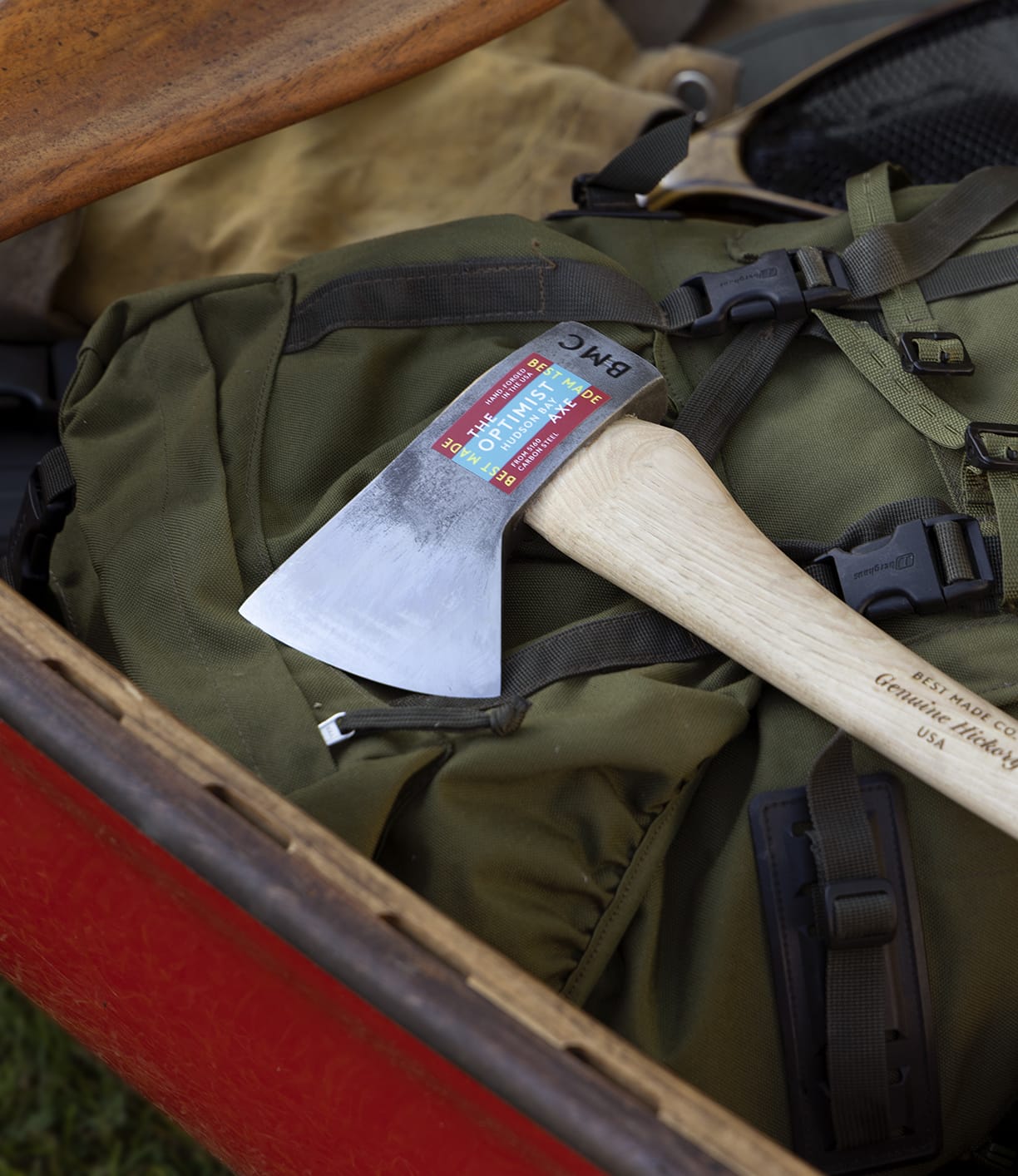
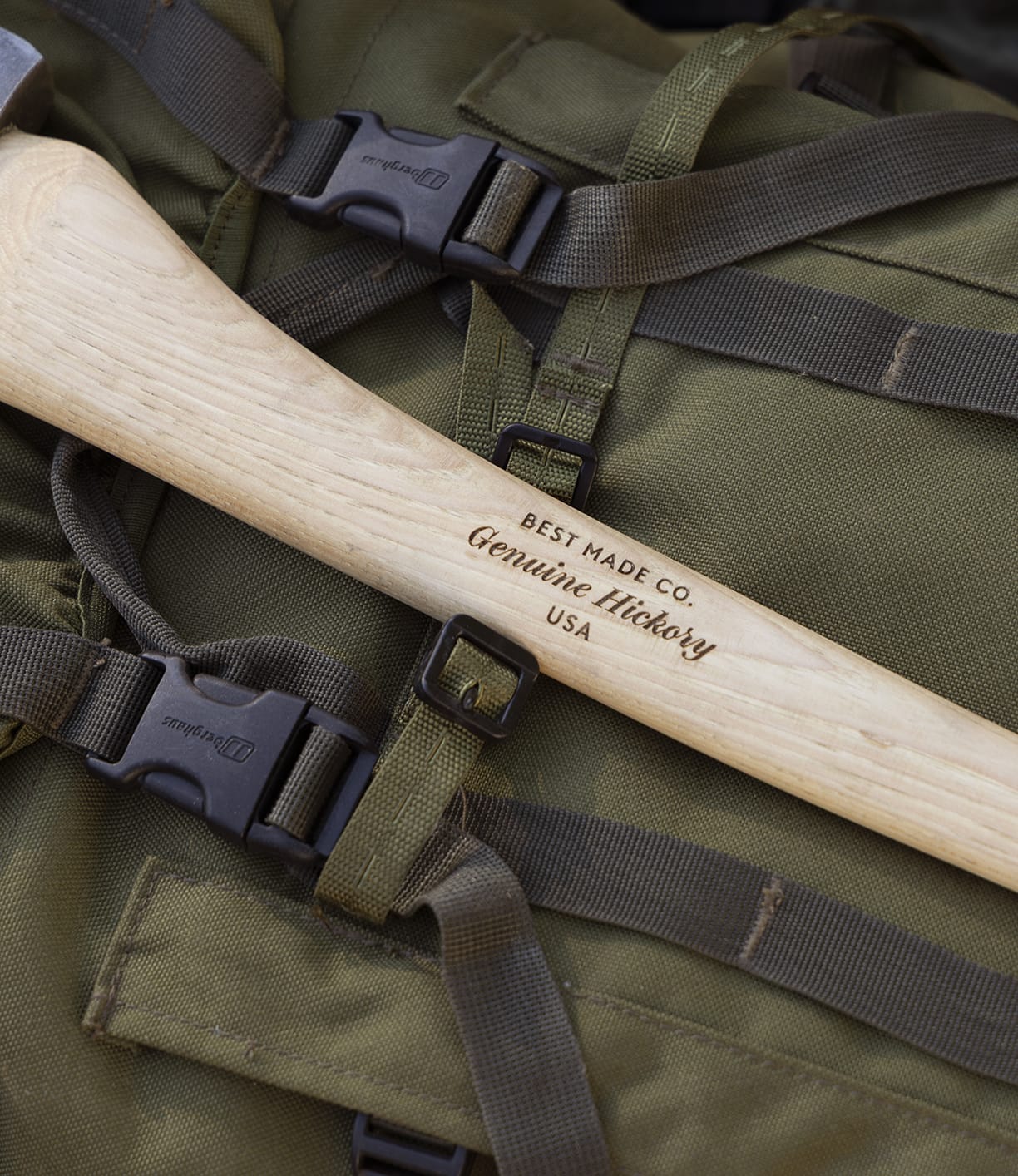
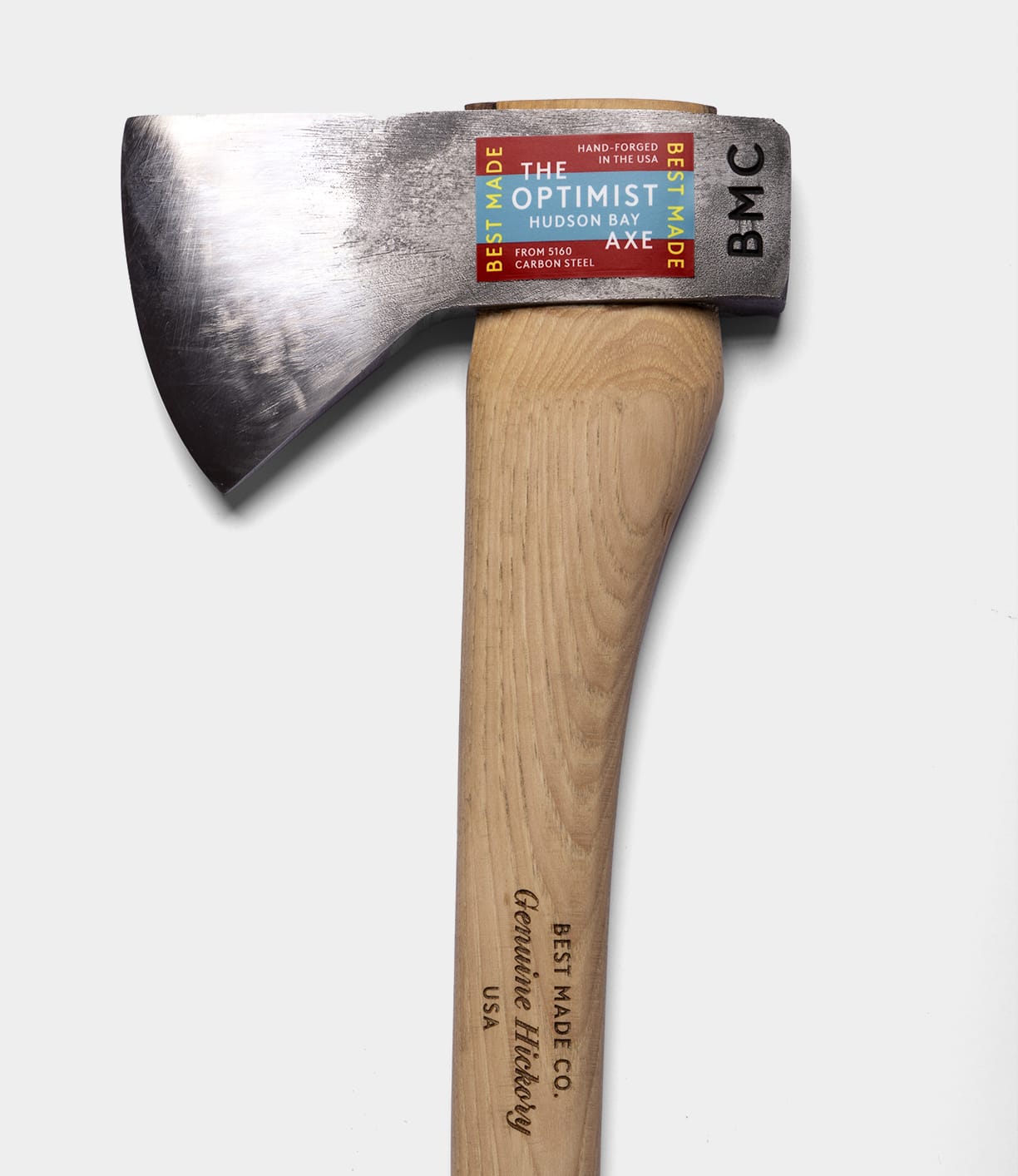
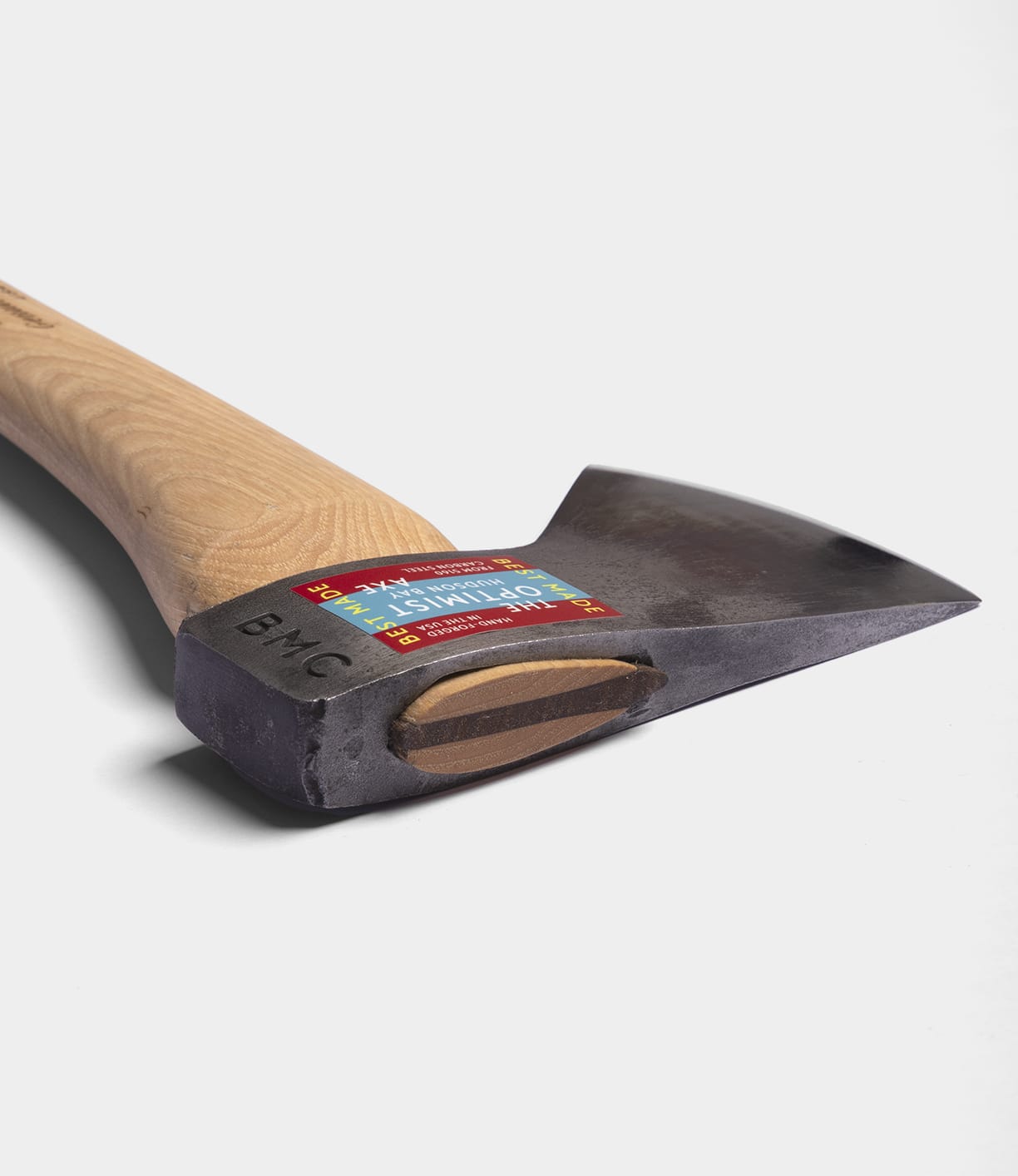
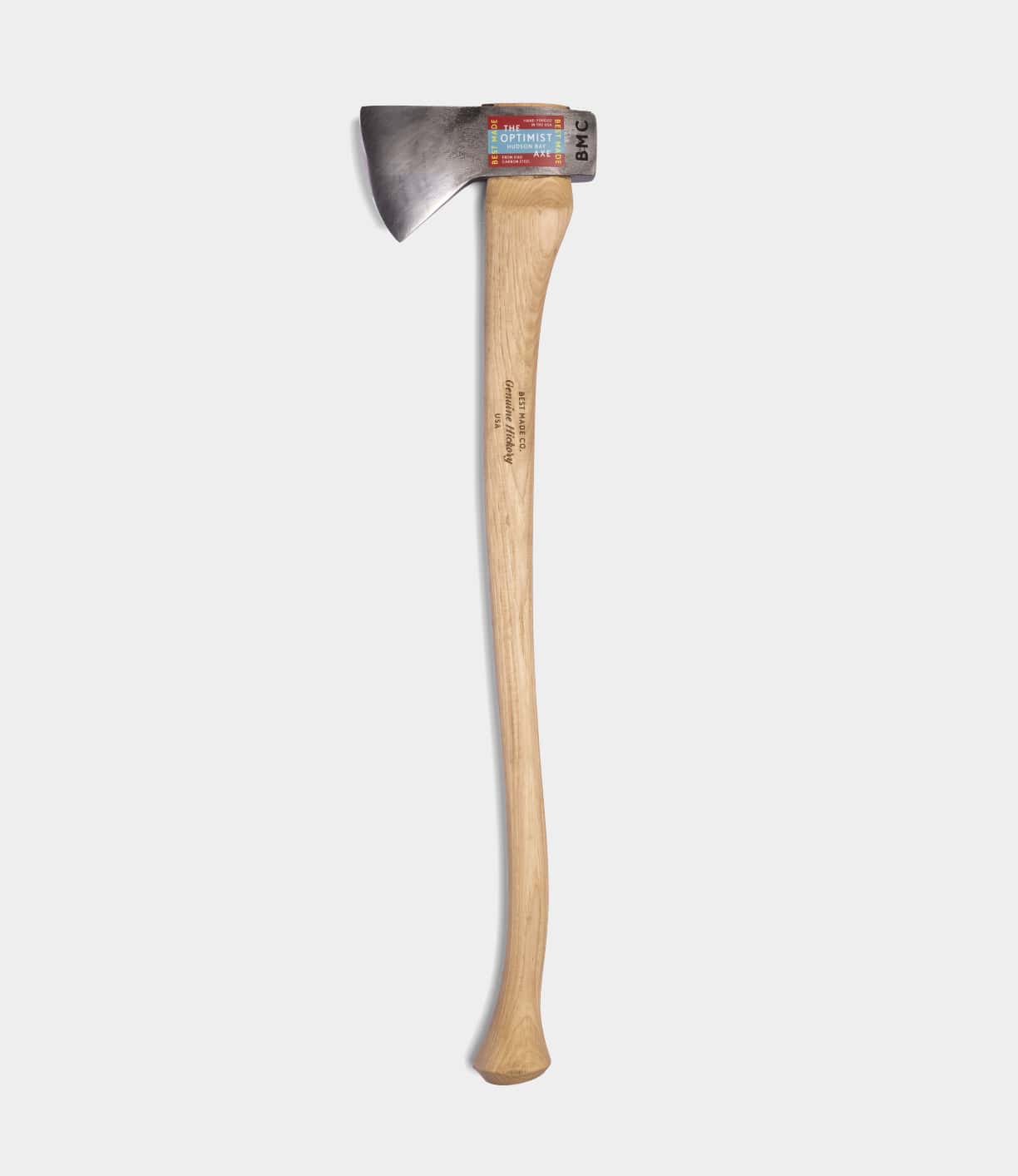
The Optimist is forged from 5160 high-carbon steel by Nathan Brandt at Farm Smith, who, since our relaunch, has guided every step of our axes' manufacturing. Each axe head is ground and sharpened by hand, and the handles are turned from American hickory, in-house, by Nathan, to our specifications. Every axe is securely stowed in a branded corrugated box with our signature Wickett & Craig bridle leather blade guard.
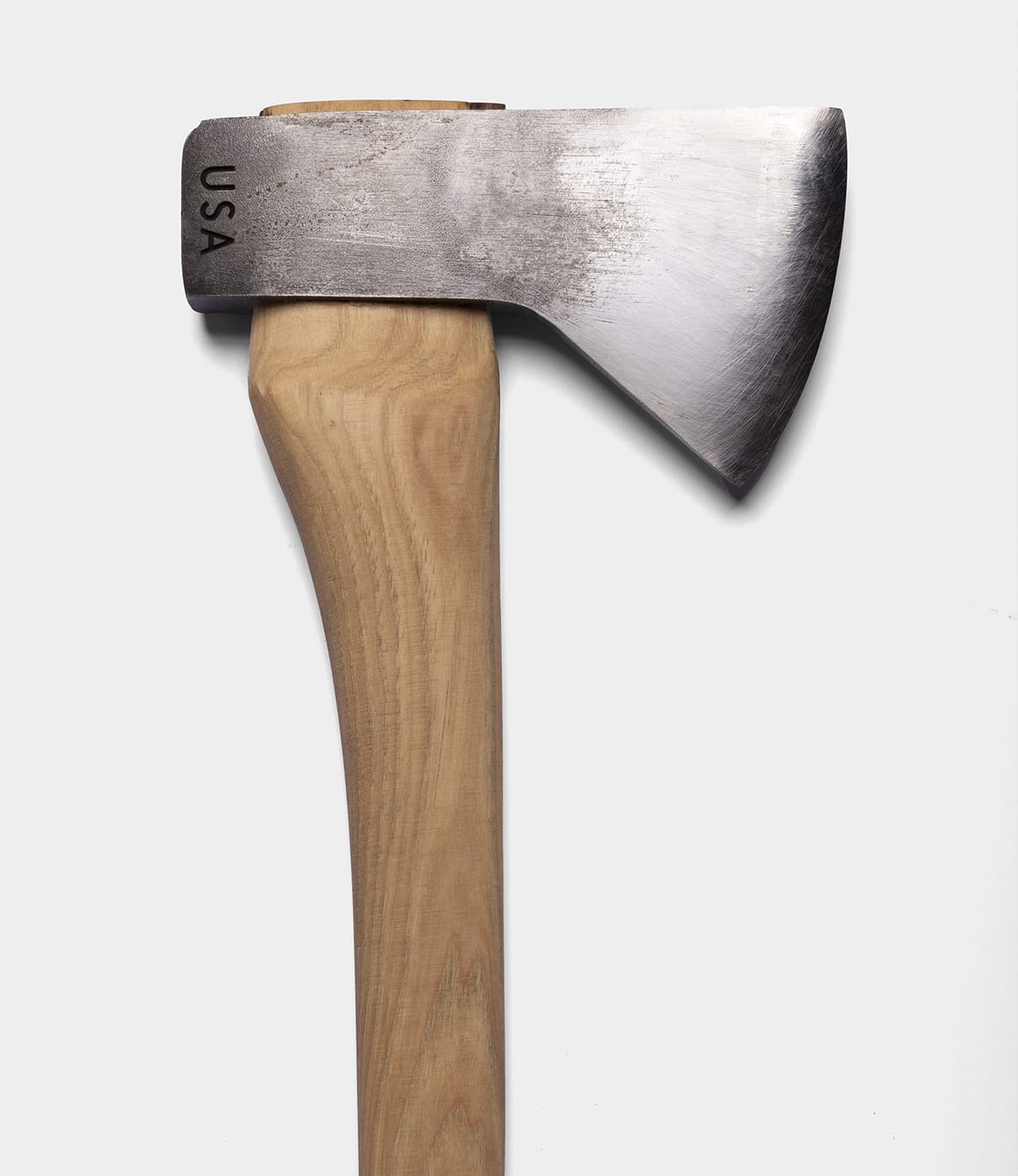
The Hudson Bay pattern traces its lineage back to the French trade "Biscayne" axes carried into the Canadian interior in the 17th and 18th centuries. The defining feature is the cutaway cheek, which kept the axe light and easy to re-handle in the field, hundreds of miles from the nearest forge. Everything about the design served the demands of life in the backwoods.
By the 19th and early 20th centuries, Canadian and American axe makers had adopted and refined the form, and the Hudson Bay forever became a fixture of countless traplines and canoe routes. We are proud to write the next chapter of this storied tool.
The Hudson Bay pattern traces its lineage back to the French trade "Biscayne" axes carried into the Canadian interior in the 17th and 18th centuries. The defining feature is the cutaway cheek, which kept the axe light and easy to re-handle in the field, hundreds of miles from the nearest forge. Everything about the design served the demands of life in the backwoods.
By the 19th and early 20th centuries, Canadian and American axe makers had adopted and refined the form, and the Hudson Bay forever became a fixture of countless traplines and canoe routes. We are proud to write the next chapter of this storied tool.

5160 high-carbon steel, Appalachian hickory
- 30 inches
- 2lbs head
- 3.3lbs total weight
- 2lbs head
- 3.3lbs total weight
Cleaning: Clean the axe head after use. Remove sap and dirt with steel wool or acetone-soaked cloth. Avoid water; it promotes rust. Wipe the handle clean and dry.
Oiling: Oil the axe head with a thin coat of boiled linseed oil to prevent rust. Wipe off excess. Oil the handle periodically to prevent drying and cracking. Do not dispose oil rags in garbage, let dry outside first.
Sharpening: Keep the axe as sharp as possible. Sharpen as needed with a stone or file, maintaining the correct bit profile.
Storage: Store the axe in a dry place with the blade guard on for safety.
Regular maintenance: Inspect regularly for wear or damage, especially where the head connects to the handle. Address any issues promptly.
Consult Buchanan-Smith’s Axe Handbook for more detailed guidelines and tips.
Oiling: Oil the axe head with a thin coat of boiled linseed oil to prevent rust. Wipe off excess. Oil the handle periodically to prevent drying and cracking. Do not dispose oil rags in garbage, let dry outside first.
Sharpening: Keep the axe as sharp as possible. Sharpen as needed with a stone or file, maintaining the correct bit profile.
Storage: Store the axe in a dry place with the blade guard on for safety.
Regular maintenance: Inspect regularly for wear or damage, especially where the head connects to the handle. Address any issues promptly.
Consult Buchanan-Smith’s Axe Handbook for more detailed guidelines and tips.
Made in the USA