
Aogami Nakiri Knife
Aogami Nakiri Knife
Regular price
$198.00
Regular price
Sale price
$198.00
Unit price
per
-
 NEW
NEW -
 NEW
NEW -
 NEW
NEW -
 NEW
NEW -
 NEW
NEW -
 NEW
NEW -
 NEW
NEW -
 NEW
NEW


Product Details
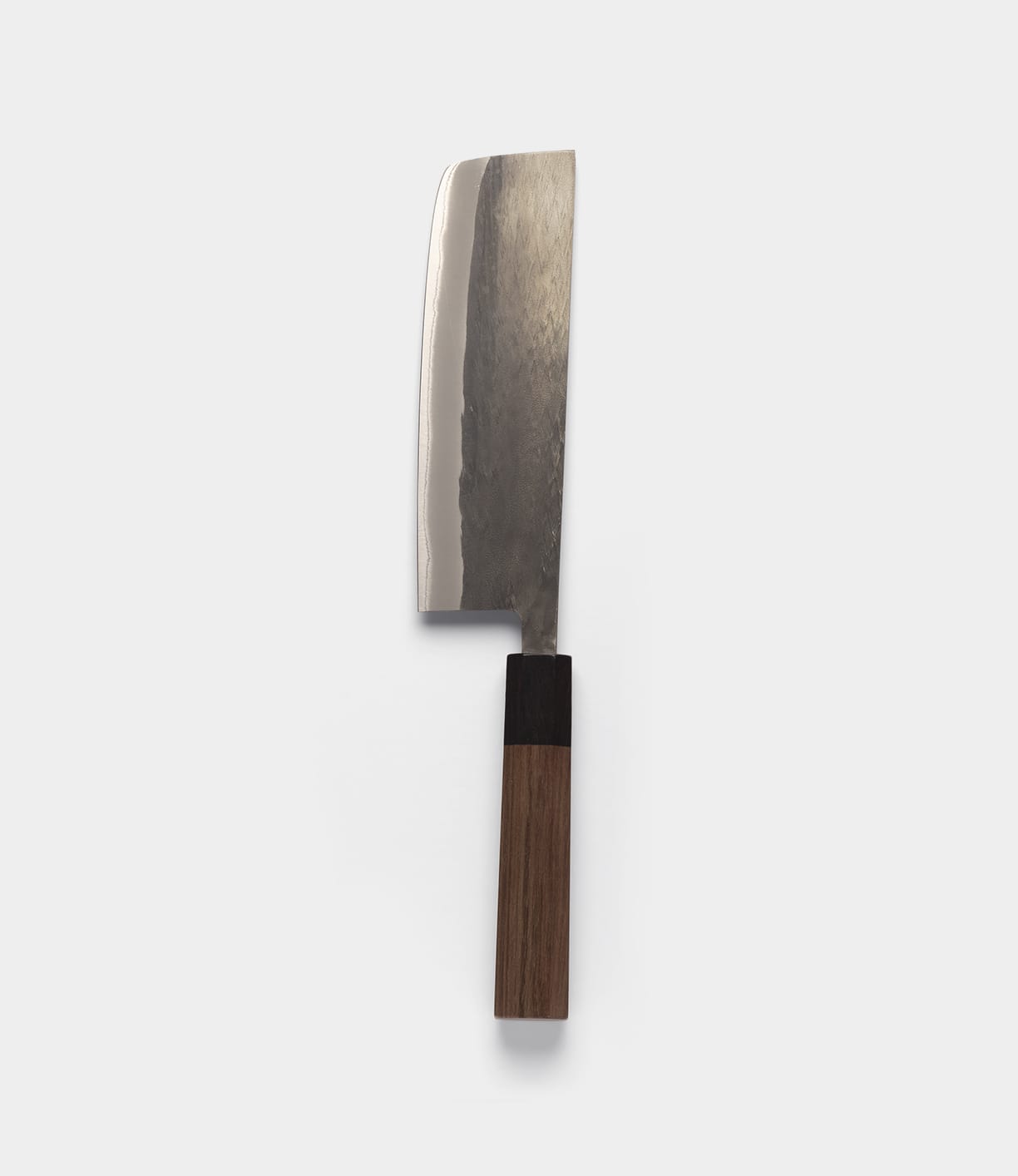
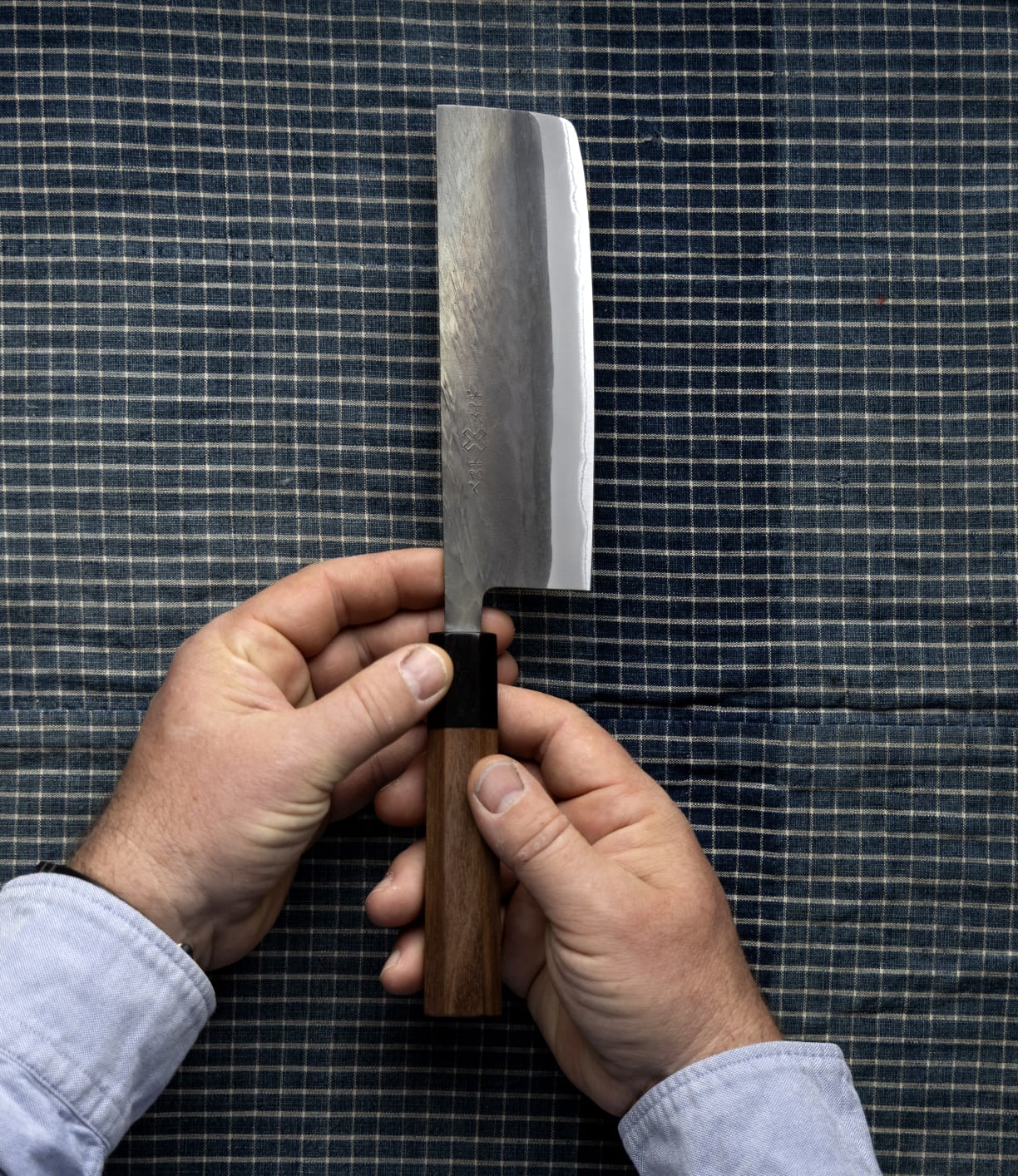
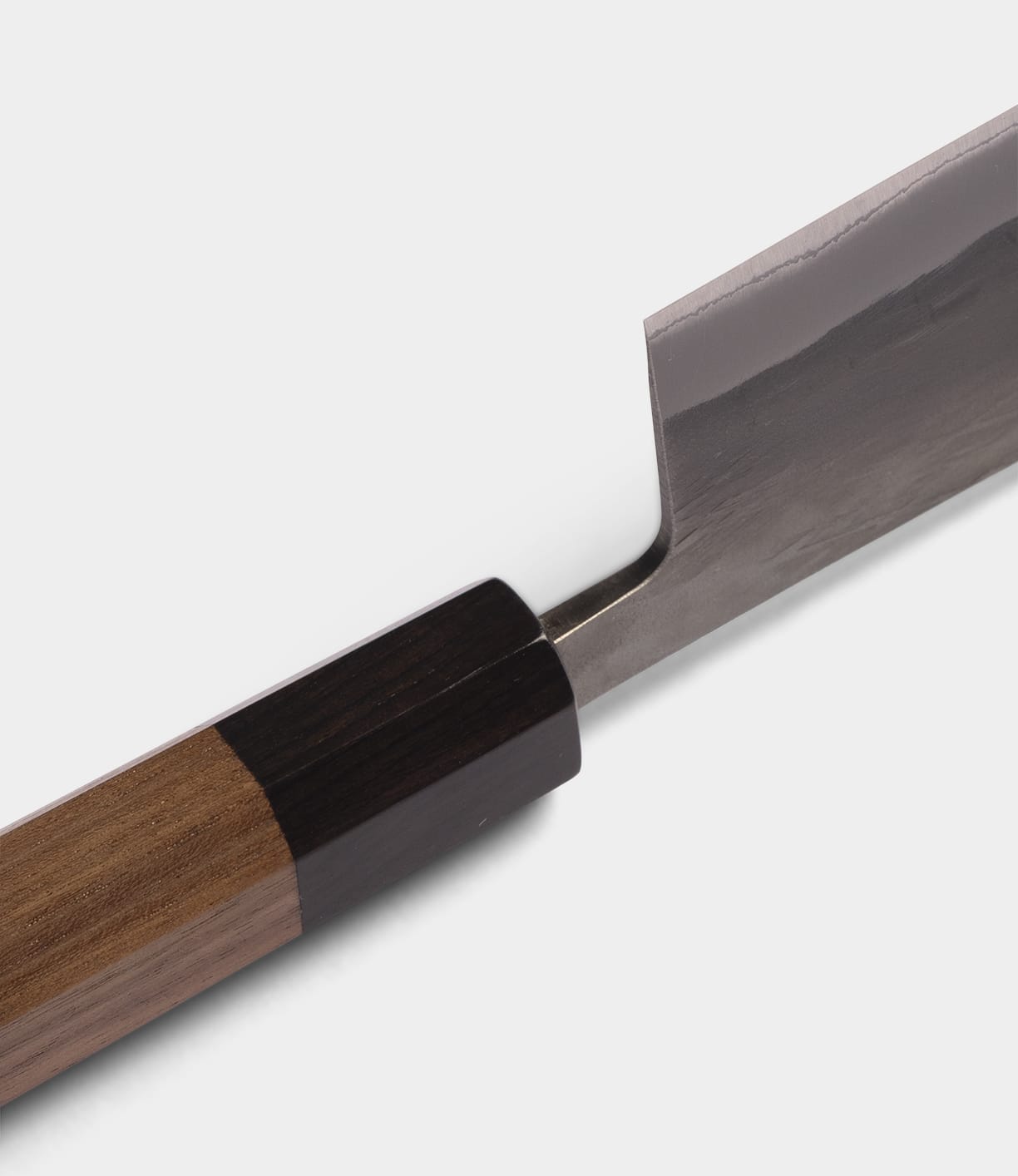
One of the oldest knife designs of the Japanese kitchen. The nakiri’s flat, rectangular blade, lacking a point, was designed specifically for clean push-cuts on vegetables. Every inch of its edge touches the board at once. Nothing is left connected at the far end, nothing accordions, and the cook doesn't have to correct for a curved belly. Set up a stack of chard or a half-dozen leeks and the work just goes faster and cleaner.
The tall, straight blade also serves as its own bench scraper — turn it on its side and move a board's worth of diced vegetables into the pot in one pass. What it is not built for is protein or bone. There is no point for detail work and no curve for rocking, and the thin hard edge that makes it so good on vegetables will chip on a chicken joint. Keep it away from anything with a skeleton.
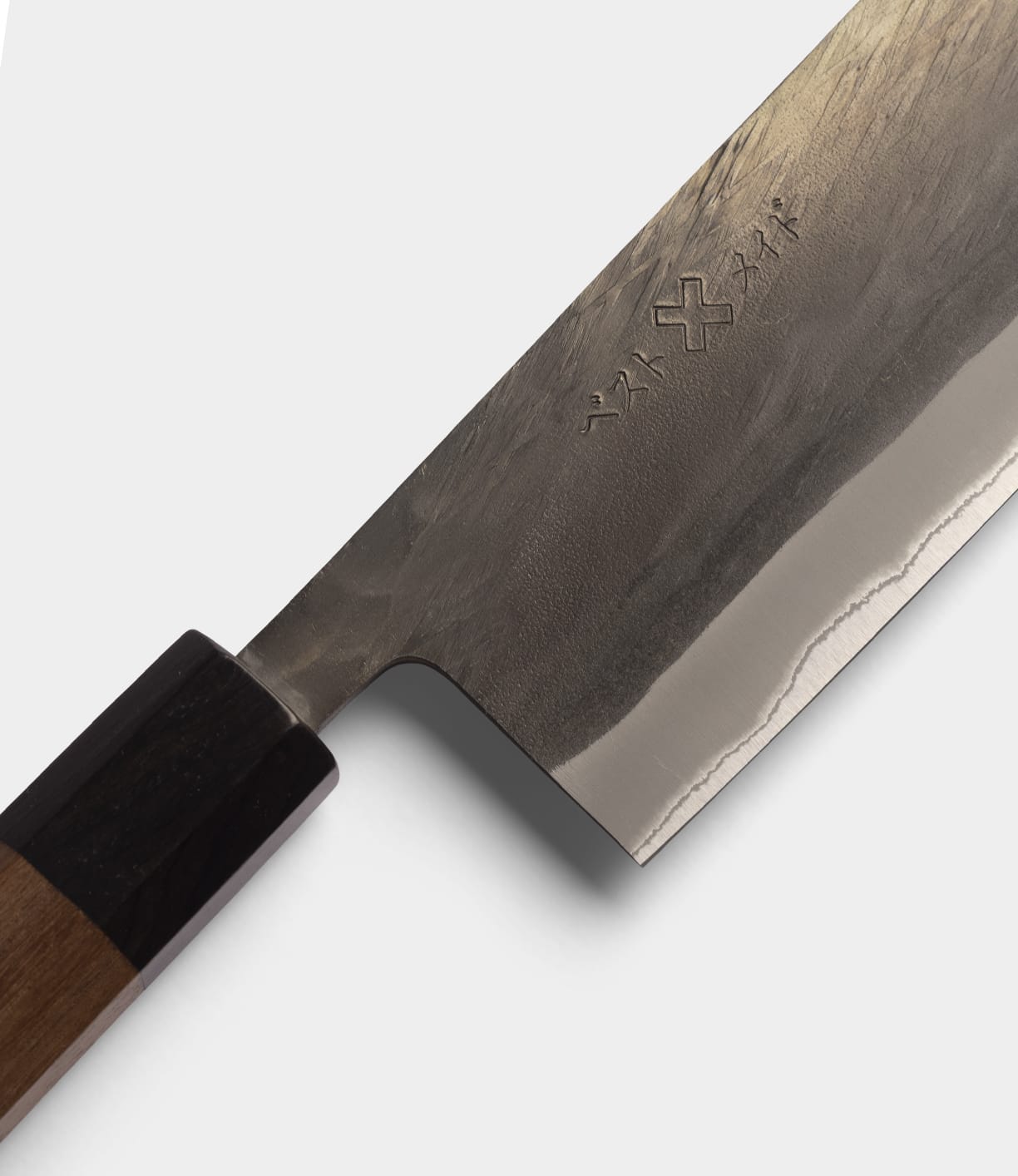
A note on the steel. The Yasugi works produced several grades of high-carbon tool steel that, to the eye, couldn’t be told apart. So the mill marked each one with a different color paper. The smiths who bought the steel adopted the shorthand, naming it after its wrapper rather than its formula. Blue paper gave us aogami-kō: blue paper steel in Japanese.
Blue Paper Steel No. 2 is one of the most widely trusted carbon steels in Japan, and the reason is balance. Aogami holds its edge longer than white steel while remaining far easier to sharpen than powdered stainless steel. At the hardness our forge runs it at, the edge can be taken thinner than a Western blade would tolerate, and that’s what's meant when they say a Japanese knife cuts differently.
The tall, straight blade also serves as its own bench scraper — turn it on its side and move a board's worth of diced vegetables into the pot in one pass. What it is not built for is protein or bone. There is no point for detail work and no curve for rocking, and the thin hard edge that makes it so good on vegetables will chip on a chicken joint. Keep it away from anything with a skeleton.
A note on the steel. The Yasugi works produced several grades of high-carbon tool steel that, to the eye, couldn’t be told apart. So the mill marked each one with a different color paper. The smiths who bought the steel adopted the shorthand, naming it after its wrapper rather than its formula. Blue paper gave us aogami-kō: blue paper steel in Japanese.
Blue Paper Steel No. 2 is one of the most widely trusted carbon steels in Japan, and the reason is balance. Aogami holds its edge longer than white steel while remaining far easier to sharpen than powdered stainless steel. At the hardness our forge runs it at, the edge can be taken thinner than a Western blade would tolerate, and that’s what's meant when they say a Japanese knife cuts differently.

- Blue steel carbon core
- Stainless steel outer laminate
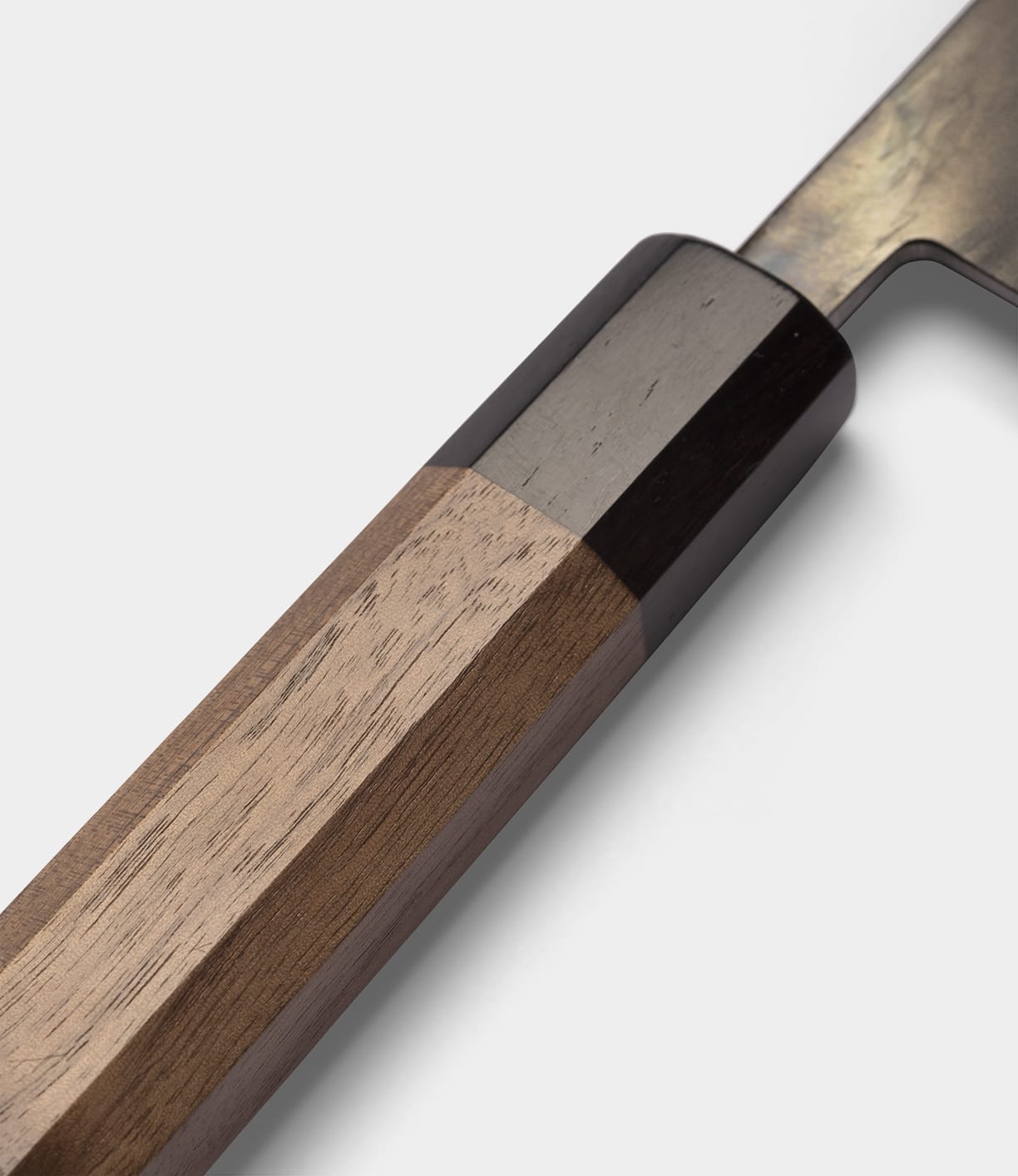
- Walnut handle
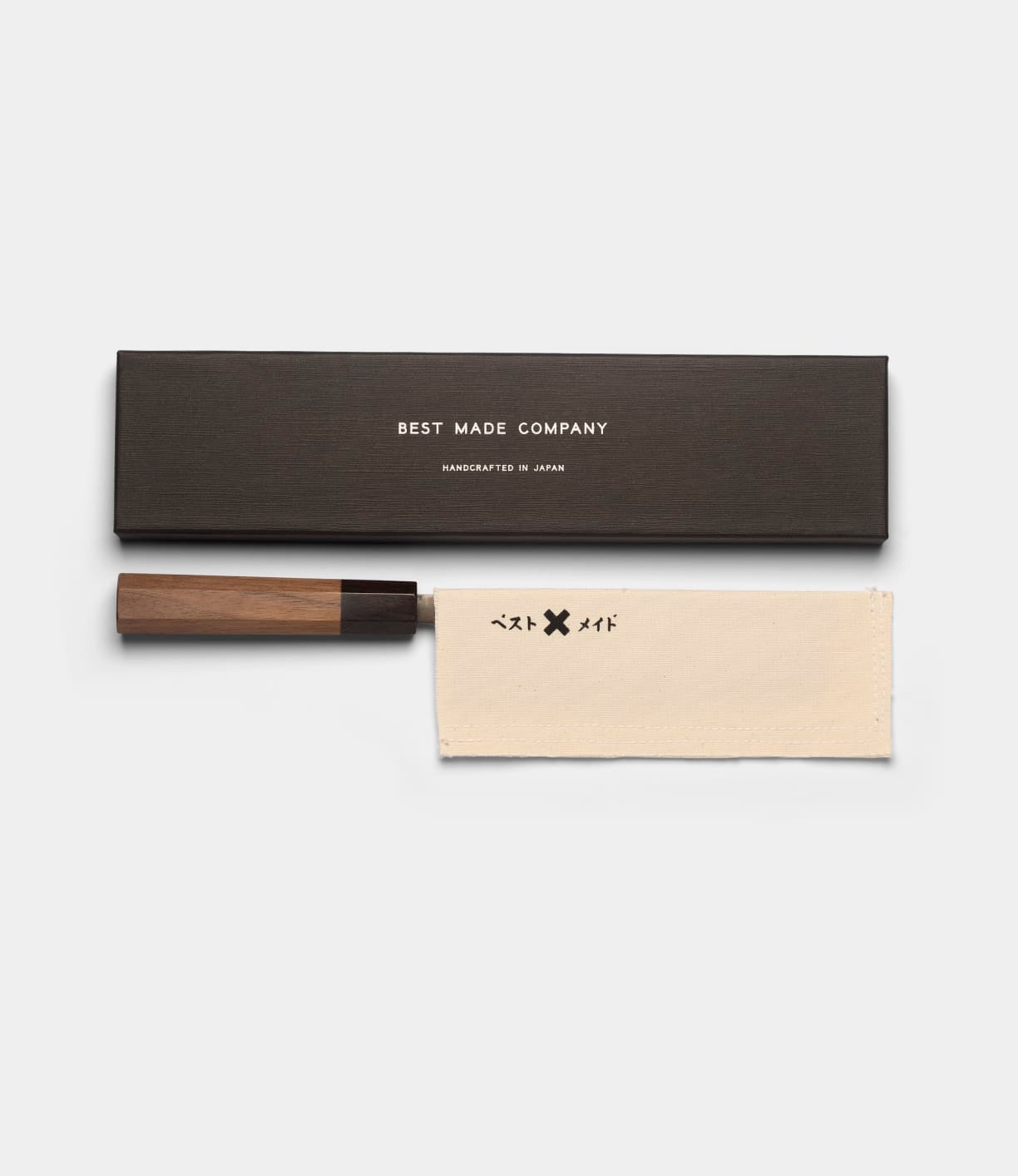
- Canvas blade guard
- Stainless steel outer laminate
- Walnut handle
- Canvas blade guard
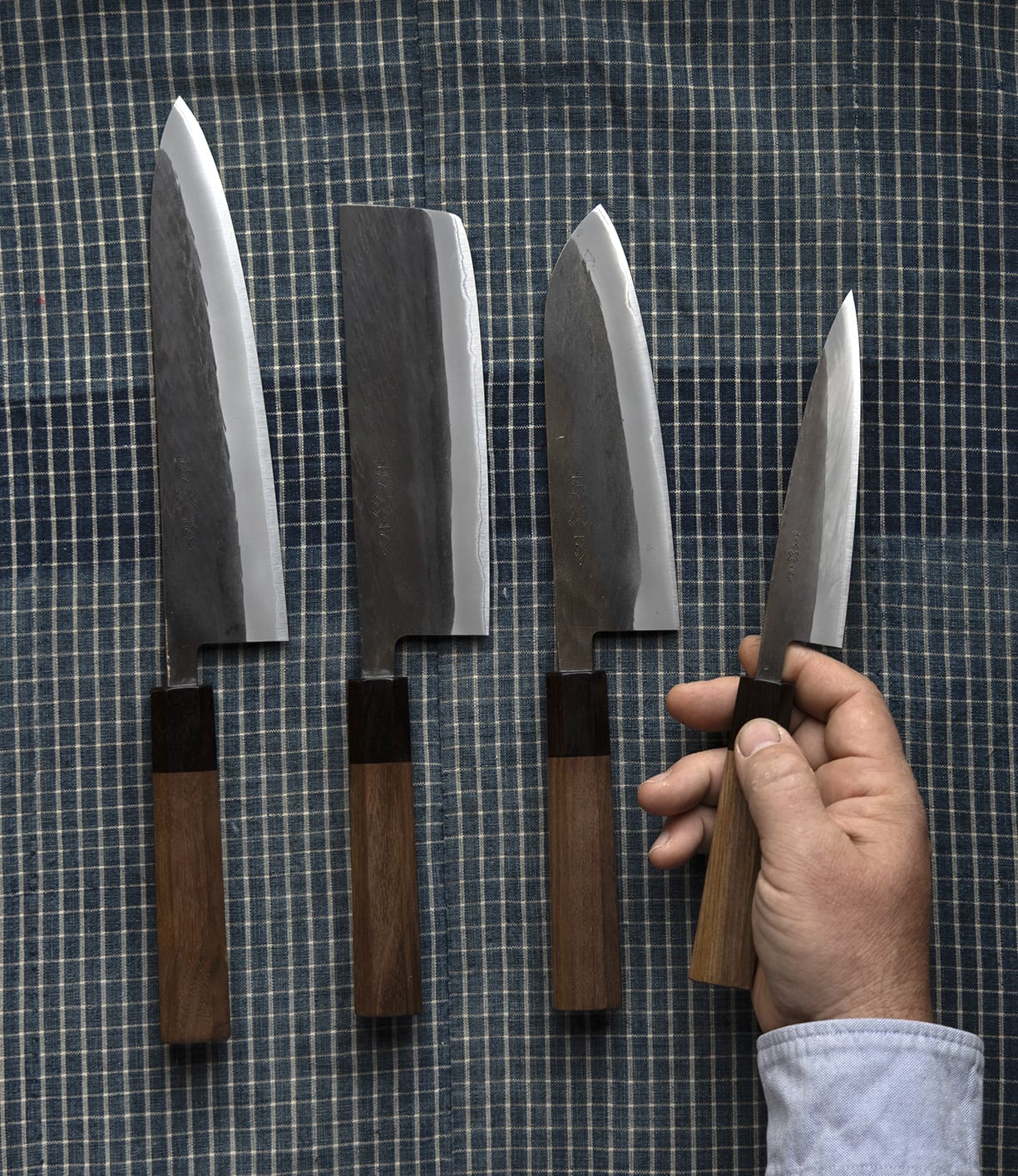
- Gyuto: 8.27” blade, total length: 14.5"
- Santoku: 6.50" blade, total length: 12"
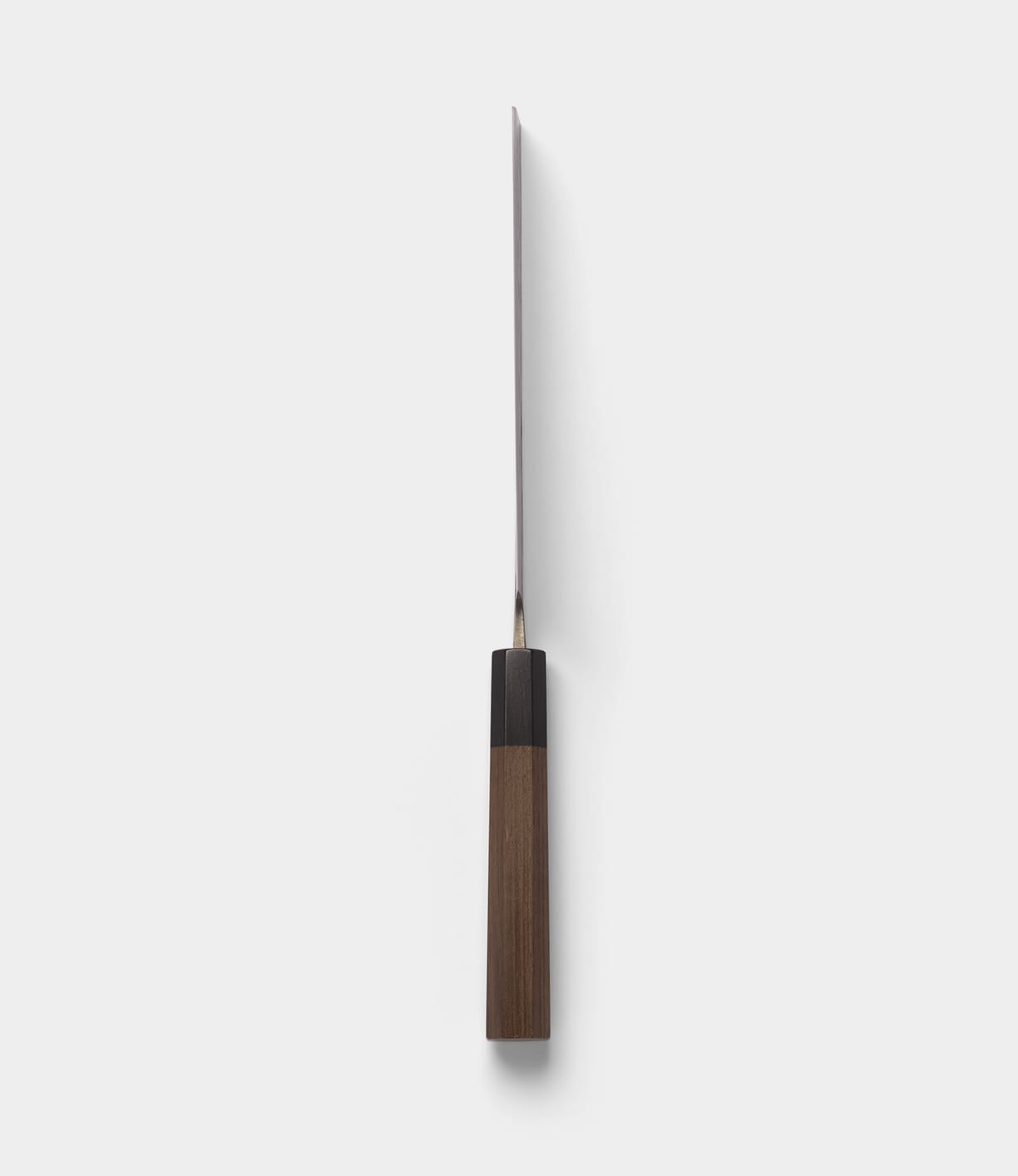
- Nakiri: 6.50” blade, total length: 12"
- Petty: 5.25" blade, total length: 10"
- Santoku: 6.50" blade, total length: 12"
- Nakiri: 6.50” blade, total length: 12"
- Petty: 5.25" blade, total length: 10"
Never run this knife through the dishwasher. Wash by hand in warm water and dry the blade immediately — the high-carbon edge tarnishes if left wet, and will rust if left wet long enough. Citrus, tomatoes, onions, and anything else acidic will mark the steel within minutes, so wipe the blade as you work rather than waiting for the end of the job. A thin coat of oil before the knife goes back in its guard protects it between uses, and matters most if it will sit unused for any stretch. Over time, those acids and oils will darken the exposed edge into a patina particular to the way the knife is used; that patina is protection rather than damage, and shouldn't be scrubbed away. Sharpen on water stones, and keep the edge off bone and frozen food.
Made in Japan